Leave Your Message
The 2026 market for Printed PE Bags is becoming more demanding, not simply more colorful. Global buyers now assess material strength, print clarity, sealing performance, and supplier reliability together. A bag may look attractive on a product page, yet fail after exposure to heat, moisture, or rough warehouse handling. Small details matter. A weak bottom seal can create costly product loss.
This guide examines practical options for food packaging, retail products, industrial goods, and general distribution needs. It considers polyethylene grades, thickness, bag dimensions, printing methods, ink adhesion, and packaging consistency. Experienced buyers should request samples before approving large production runs. Check the seal with a simple pull test. Rub the printed surface with a dry cloth. Then inspect the bag after storage under realistic conditions.
Reliable sourcing also requires evidence. Review factory quality procedures, material specifications, production photos, test records, and previous export experience. Compliance requirements differ across countries, especially for packaging that contacts food or supports environmental claims. Do not accept vague certificates. Verify their scope and validity.
There is no perfect bag.
A thicker film is not always the best choice. It may improve strength, but increase material use and shipping weight. A cheaper quotation may hide weaker resin, inconsistent dimensions, or limited quality control. This article compares these trade-offs carefully, helping global buyers select Printed PE Bags that balance appearance, performance, cost, and responsible purchasing. Mistakes still happen, even with careful planning. The goal is to reduce them through clear specifications, realistic testing, and accountable supplier communication.
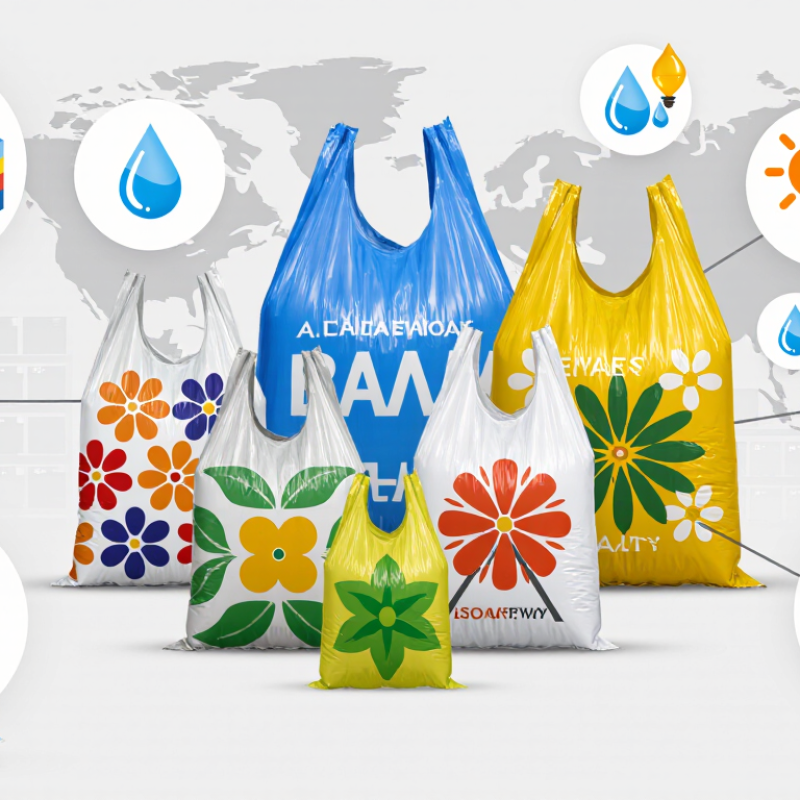
Printed PE bags are flexible packaging made from polyethylene film, usually LDPE or HDPE. A printer applies text, symbols, or images to the film before bag conversion. These bags protect garments, produce, hardware, powders, and many dry goods from dust and moisture. Their surfaces also carry handling instructions, batch information, and disposal guidance.
According to the OECD’s Global Plastics Outlook, packaging represented about 40% of global plastic waste in 2019. This figure explains the growing focus on lighter films, responsible printing, and recovery systems. PE bags can use less material than rigid packaging, but performance depends on thickness, sealing strength, and transport conditions. In practical sourcing, I have seen attractive bags fail because their seals split during humid warehouse storage. Appearance is not enough.
Tips: Ask for film type, thickness, ink specifications, seal tests, and pre-shipment samples. Request migration or food-contact documents when relevant. Check whether local collection systems accept the bag structure. The Global Commitment 2023 Progress Report also shows that flexible packaging remains difficult to recover at scale. That point deserves honest attention. A recyclable design may still become waste when collection is unavailable. Clear printing, practical pack sizes, and verified production data usually serve buyers better than excessive graphics.
Printed PE bags are flexible packaging bags made from polyethylene film and decorated with text, graphics, barcodes, instructions, or other artwork. The most common materials are LDPE, LLDPE, and HDPE. The right option depends on required strength, clarity, seal performance, print quality, product protection, regulatory requirements, and end-of-life considerations.
| Bag Type | Typical PE Material | Common Thickness | Key Properties | Typical Printing Method | Common Uses | Recommended Product Categories | Important Buyer Considerations |
|---|---|---|---|---|---|---|---|
| T-Shirt Shopping Bag | HDPE or recycled HDPE; LLDPE may be added for toughness | 8–30 microns | Lightweight, economical, good tear resistance, compact storage | Flexographic printing, generally 1–6 colors | Retail checkout, convenience stores, pharmacies, takeaway service | Clothing, small household goods, packaged retail items | Check local restrictions on single-use plastic bags, minimum thickness rules, and recycled-content requirements. |
| Flat Poly Bag | LDPE, LLDPE, or HDPE | 25–100 microns | Simple construction, transparent or colored, easy to heat-seal | Flexographic printing; high-detail artwork may require surface treatment | Inner packaging, component protection, garment packing, document protection | Apparel, hardware, stationery, industrial parts | Specify opening dimensions, seal width, film clarity, and whether the bag must be antistatic or perforated. |
| Gusseted PE Bag | LDPE or LLDPE | 40–150 microns | Expanded side or bottom gussets provide higher volume and improved load capacity | Flexographic printing, typically 1–8 colors | Bulk packing, liners, large components, industrial and agricultural products | Textiles, chemicals in suitable inner packaging, feed, hardware, spare parts | Measure both flat width and gusset depth. Confirm the filled bag dimensions and required seal strength. |
| Header Bag | LDPE or HDPE film with a folded or attached header | 35–80 microns | Retail-ready presentation, hanging display, visible product area | Flexographic printing; a separate paper or plastic header may be printed | Point-of-sale hanging display and small-item packaging | Accessories, toys, craft items, cables, household products | Confirm hanger-hole shape, header strength, opening style, and compatibility with automated filling equipment. |
| Zip-Lock PE Bag | LDPE or LLDPE with an integrated polyethylene zipper | 50–150 microns | Reusable opening, good visibility, convenient product access | Flexographic printing; printing is usually placed away from the zipper seal area | Organizing, storage, sample packaging, small-part protection | Fasteners, electronic accessories, craft supplies, food products where approved | For food contact, confirm the complete structure, inks, additives, and closures comply with the destination market regulations. |
| Mailing or Courier Bag | Co-extruded LDPE/LLDPE, often with a high-strength seal | 50–100 microns | Opaque options provide privacy; lightweight, water-resistant, tamper-evident closures available | Flexographic printing, commonly 1–6 colors | E-commerce shipping, apparel dispatch, document mailing | Clothing, soft goods, catalogs, non-fragile merchandise | Specify adhesive-strip performance, opacity, puncture resistance, return strip, and recyclability of the final construction. |
| Drawstring PE Bag | LDPE or LLDPE | 40–100 microns | Easy opening and carrying, suitable for repeated access during short-term use | Flexographic printing | Garment storage, laundry collection, promotional distribution | Clothing, linens, footwear, event materials | Check cord or tape attachment strength, closure dimensions, and child-safety requirements where applicable. |
| Produce or Food Packaging Bag | Food-contact-grade LDPE, LLDPE, or HDPE when legally suitable | 15–60 microns | Lightweight, moisture-resistant, available with ventilation holes or perforations | Food-contact-compatible flexographic inks and coatings | Fresh produce, bakery items, frozen products, dry food portions | Fruits, vegetables, bread, snacks, and other approved food applications | Food-contact compliance must be verified for the destination market; do not assume that every PE bag is suitable for food. |
| Heavy-Duty Industrial Bag | LLDPE or multilayer PE film | 100–250 microns | High puncture and tear resistance, strong seals, suitable for demanding handling | Flexographic printing, generally 1–6 colors | Industrial liners, component transport, waste handling, bulk goods | Machinery parts, construction materials, industrial supplies | Define drop height, filled weight, puncture risk, stacking conditions, and required seal configuration before approval. |
| Garbage or Waste Bag | Recycled HDPE, LDPE, or LLDPE depending on strength requirements | 15–100 microns | Available in flat, gusseted, star-sealed, drawstring, or tie-handle formats | Flexographic printing, often with simple text or usage instructions | Household, commercial, healthcare, and industrial waste collection | General waste, recyclable collection, garden waste, office waste | Specify waste type, leak resistance, recycled content, color coding, odor-control requirements, and applicable local rules. |
| Data Dimension | Typical Options or Range | Why It Matters | Recommended Specification for a Purchase Order |
|---|---|---|---|
| Bag Width | Approximately 80–1,200 mm, depending on the bag format | Determines product fit, packing efficiency, and required film usage | State finished internal width and acceptable tolerance in millimeters. |
| Bag Length | Approximately 100–2,000 mm | Affects product coverage, closure area, and packing speed | State finished internal length, flap length if applicable, and tolerance. |
| Film Thickness | About 8–250 microns; 1 micron equals 0.001 mm | Influences stiffness, strength, transparency, cost, and legal compliance | Specify nominal thickness, test method, and permitted thickness variation. |
| Material Grade | LDPE for flexibility and clarity; HDPE for stiffness; LLDPE for toughness and puncture resistance | Material selection affects bag performance and production cost | List the required resin type, recycled content percentage, and any additive restrictions. |
| Printing Coverage | One side, two sides, partial print, or full-surface print; commonly 1–8 colors | Controls visual impact, artwork cost, ink usage, and registration requirements | Provide editable artwork, color references, print area, repeat length, and barcode requirements. |
| Closure Type | Open top, heat seal, adhesive strip, zipper, drawstring, tie handle, or flap | Determines usability, tamper evidence, packing speed, and product protection | Specify closure dimensions, opening direction, seal width, and required opening force. |
| Transparency and Color | Clear, translucent, white, black, colored, or opaque multilayer construction | Impacts product visibility, privacy, branding, and light protection | Define color reference, opacity level, gloss or matte finish, and acceptable visual tolerance. |
| Recycled Content | 0–100% post-consumer or post-industrial recycled PE, subject to performance and regulations | Can support sustainability targets but may affect clarity, consistency, and mechanical properties | Specify recycled-content type, percentage, traceability documents, and performance acceptance criteria. |
| Quality Tests | Dimensions, thickness, tensile strength, elongation, tear, puncture, seal strength, print adhesion, and leakage | Confirms that bags can withstand filling, transport, storage, and end use | Agree on sampling plan, test methods, inspection level, defect classification, and approval sample. |
| Compliance Documentation | Food-contact declarations, recycled-content evidence, ink information, safety data, and market-specific declarations where required | Import and retail requirements differ by destination and intended use | Identify destination countries and intended use before requesting compliance documents. |
Note: The dimensions and thickness ranges above are typical industry planning ranges rather than universal limits. Final specifications should be validated with product weight, packing method, transport conditions, applicable laws, and a production sample. Polyethylene bags should be collected and recycled through facilities that accept the relevant film material; local waste-management systems determine actual recyclability.