Wholesale buyers need bags that protect products, support branding, and reduce unnecessary environmental impact. This guide examines seven Degradable Bags suited to retail, food service, packaging, and everyday distribution needs. Each option is considered through material type, load strength, thickness, sealing quality, and storage performance.
A practical buying decision requires more than attractive sustainability claims. Buyers should request product specifications, independent test reports, and clear disposal guidance. Important details include whether a bag is compostable, biodegradable, or designed for controlled degradation. These terms are not interchangeable. Supplier experience also matters, especially when orders involve different climates, shipping distances, and packing machines. A bag that performs well in a dry warehouse may soften during humid transport.
The comparison focuses on usable evidence rather than impressive wording. Sample testing can reveal weak handles, leaking seams, or poor resistance to sharp products. Small failures become expensive at wholesale volume. Certification requirements and labeling expectations may also differ by market, so buyers should confirm current regional standards before ordering. No option is perfect. Some bags cost more, while others require specific disposal conditions that customers may misunderstand. A careful buyer should balance environmental goals, product safety, budget, and real end-of-life conditions. The best choice may not be the cheapest one, and this guide leaves room for that uncomfortable conclusion.
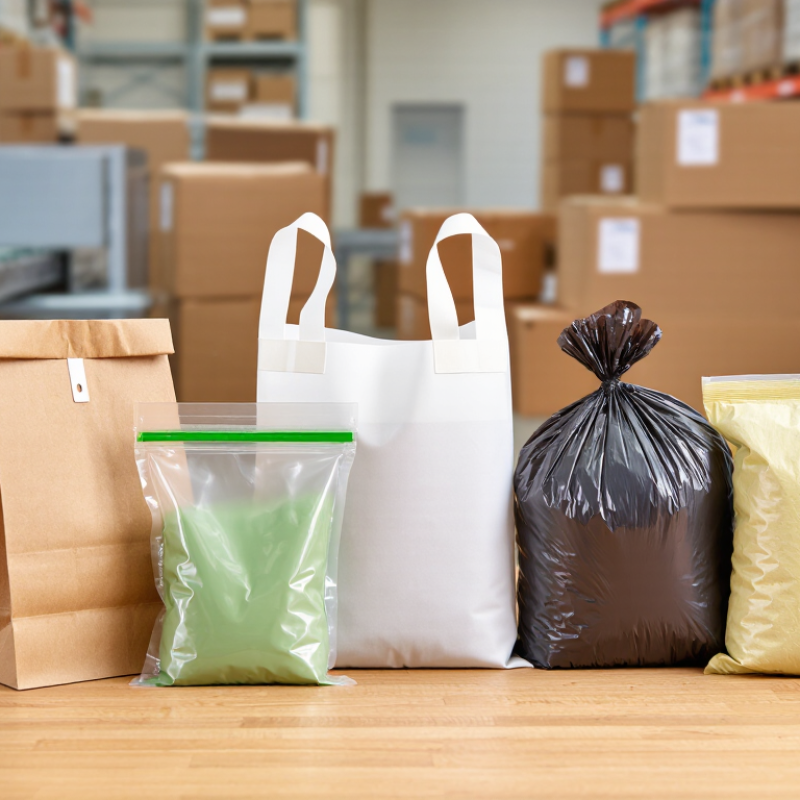
A degradable bag is not defined by a friendly-sounding label. It needs a clear material explanation and evidence of how it breaks down. Some bags fragment into smaller pieces without fully decomposing. That is a serious purchasing risk. Wholesale buyers should request test reports, certification details, and intended disposal conditions. Industrial composting, home composting, soil, and landfill environments behave differently. The same bag may perform well in one setting and poorly in another. Ask specific questions.
Material choice affects every shipment. Compostable films often use plant-based polymers or blended formulations, while other degradable options depend on controlled additives. Check thickness, tear resistance, seal strength, moisture tolerance, and storage life. A bag that weakens near a warehouse door is not reliable. Request samples in actual sizes. Fill them with the expected load, stack them, and test the handles. Small details matter. Attractive samples can still fail during rough transport. That mistake is expensive.
For wholesale suitability, documentation must match the physical product. Confirm the factory batch, film structure, dimensions, printing inks, and test scope. Ask whether the evidence covers the finished bag, not only the raw material. Verify minimum order quantities, lead times, replacement terms, and packaging protection. These commercial points influence sustainability because rejected stock creates waste. Be careful with broad claims such as “eco-friendly.” They are too vague. A stronger specification states the breakdown environment, time range, temperature, and handling requirements. Some details remain uncertain, especially after long storage. Record that uncertainty before approving a large order.
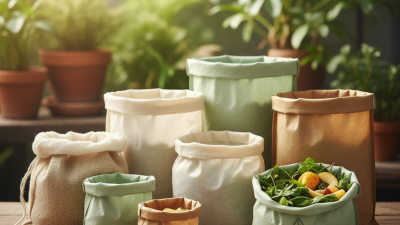
Wholesale buyers need more than a “green” label. They need correct material, reliable sealing, and clear disposal instructions. The OECD’s Global Plastics Outlook reports that only 9% of plastic waste was recycled globally. This makes disposal planning essential.
Compostable shopping bags suit supermarkets and takeaway counters. Compostable produce bags fit fruit, vegetables, and bakery items. Starch-blend garbage liners work for food-service waste, but they need suitable composting conditions. Compostable courier mailers support online retailers. Paper-based carry bags suit clothing shops and gift stores. Compostable garment covers protect dry-cleaned or stored clothing. Agricultural mulch bags can support seasonal farming operations.
Seven useful options. Different jobs.
European Bioplastics and nova-Institute estimated global bioplastics production capacity at about 2.18 million tonnes in 2023. They forecast approximately 7.43 million tonnes by 2028. However, capacity growth does not guarantee local composting access. Buyers should request third-party certification, thickness data, tear strength, and shelf-life tests. Small pilot orders can reveal weak seals or moisture damage before large purchasing commitments. This step is often skipped. That is a costly mistake.
Oxo-degradable products require extra caution because they may fragment rather than fully biodegrade. Terminology also varies between suppliers. Ask for the exact polymer composition and disposal route. A bag that performs well in a warehouse may fail in a humid delivery environment. E-E-A-T in sourcing means checking technical documents, testing samples, and matching each bag to its real business use.
For wholesale buyers, the “best” degradable bag depends on its end use, not its label. Seven common options include kraft paper, coated paper, starch blends, PLA blends, PBAT blends, PHA films, and cellulose films. Paper often provides good stiffness, but moisture can weaken its seams. PLA offers clear appearance and useful rigidity. PHA can perform well in flexible packaging, though supply and pricing remain less predictable. Starch blends feel softer and may need thicker gauges.
Compare tensile strength, tear resistance, puncture resistance, and seal strength using independent laboratory reports. A thin bag may reduce material use, but it can fail when carrying a wet 5-kilogram load. Ask suppliers for results at realistic temperatures and humidity levels. One dry-room test is not enough. I have seen specifications look impressive until handles stretched during warehouse handling.
Decomposition claims require closer inspection. EN 13432-based industrial composting criteria generally require disintegration within 12 weeks and biodegradation within six months under controlled conditions. That does not mean the bag disappears in soil, seawater, or a household compost bin. The United Nations Environment Programme reported that plastic pollution could be reduced by 80% by 2040 with major system changes. The OECD’s Global Plastics Outlook also reported only 9% of plastic waste was recycled globally in 2019. These figures expose a practical weakness: disposal infrastructure matters as much as material chemistry. Buyers should match certification, local collection routes, shelf life, and load testing before approving volume orders.
| Bag Material / Type | Typical Composition | Typical Tensile Strength* | Moisture and Load Performance | Decomposition Performance | Wholesale Applications | Key Limitations |
|---|---|---|---|---|---|---|
| PBAT/PLA Compostable Film | Flexible aliphatic-aromatic polyester blended with PLA; commonly used for liners, produce bags, and waste bags. | Approximately 20–45 MPa, depending on blend ratio, thickness, and processing. | Good flexibility and tear resistance; suitable for light-to-medium wet loads when properly sealed. | Generally designed for industrial composting at approximately 55–60°C; certified products may disintegrate within roughly 3–6 months under suitable conditions. | Food-waste liners, retail carry bags, produce bags, and commercial compost-collection bags. | Usually does not decompose quickly in cool backyard compost or ordinary landfill conditions; requires certification and suitable composting access. |
| Starch-Based Compostable Film | Thermoplastic starch combined with biodegradable polyesters or other compostable polymers. | Approximately 10–30 MPa; formulation and humidity have a significant effect. | Good flexibility in moderate humidity; moisture resistance and long-term load retention are usually lower than conventional polyethylene. | Can biodegrade under industrial composting conditions; high humidity and microbial activity accelerate breakdown, while dry or cold environments slow it. | Shopping bags, bread bags, lightweight packaging, and short-life food-service bags. | May absorb moisture, lose stiffness, or become tacky during storage if humidity protection is inadequate. |
| PHA-Based Biodegradable Film | Polyhydroxyalkanoates produced by microbial fermentation; grades vary in flexibility and barrier performance. | Approximately 15–35 MPa, depending on PHA type and plasticization. | Suitable for light-to-medium loads; moisture and heat resistance vary significantly by grade. | Can biodegrade in industrial composting and, for some grades, in soil or marine environments; the rate depends strongly on thickness, temperature, and local microorganisms. | Specialty food packaging, compostable pouches, agricultural films, and premium sustainability programs. | Higher material cost and less consistent availability than mainstream compostable polyester blends. |
| Cellulose Film Bag | Regenerated cellulose derived from wood pulp or other plant-based cellulose sources; may include compostable coatings. | Approximately 20–80 MPa, with strength varying by orientation, coating, and humidity. | Good appearance and printability; untreated film has limited resistance to water and high humidity. | Generally biodegradable and compostable when coatings, inks, and adhesives are also compatible; uncoated cellulose can break down relatively quickly in moist biological environments. | Dry-food bags, gift packaging, bakery packaging, inner wraps, and transparent presentation packs. | Not ideal for heavy, wet, or long-storage applications unless a certified moisture-resistant coating is used. |
| Kraft Paper Bag | Paper made primarily from cellulose fibers; handles, wet-strength agents, laminates, and coatings affect end-of-life performance. | Approximately 30–70 MPa in the machine direction for common kraft papers; basis weight is equally important for carrying capacity. | Strong for dry goods and short-distance carrying; uncoated paper loses strength rapidly when saturated. | Uncoated paper is readily recyclable and biodegradable; plastic laminates, waxes, and some wet-strength additives can reduce recyclability and compostability. | Retail shopping, takeout packaging, dry goods, bakery products, and promotional packaging. | Higher storage volume, lower water resistance, and possible recycling problems when heavily coated or contaminated. |
| PBS Compostable Film | Polybutylene succinate, a biodegradable polyester that may be blended with other compostable polymers. | Approximately 30–60 MPa, depending on grade, crystallinity, and additives. | Good flexibility and useful heat resistance; generally suitable for light-to-medium loads and some food-contact formats when compliant. | Biodegradation is generally faster under controlled industrial composting than in ambient soil; thicker products require more time. | Food-waste bags, agricultural packaging, shopping bags, and compostable flexible packaging. | Availability and cost can vary; biodegradation claims should be verified for the exact thickness and finished product. |
| Biodegradable Polyolefin Blend with Certified Additives | Polyethylene or another polyolefin combined with additives intended to promote oxidation and later biological activity. | Approximately 15–35 MPa, broadly comparable to conventional thin-film packaging. | Good moisture resistance, flexibility, and load performance; often better for outdoor handling than starch-rich films. | Decomposition claims vary widely. Oxidative fragmentation alone is not equivalent to complete biodegradation, and some jurisdictions restrict oxo-degradable plastic claims because of microplastic concerns. | Applications requiring conventional-film handling characteristics where independently verified end-of-life data is available. | Should not be marketed as compostable without recognized certification proving disintegration and biodegradation under defined conditions. |
Wholesale buyers should inspect “degradable” claims carefully. The term may describe biodegradable, compostable, or another material behavior. These options are not interchangeable. Ask suppliers for current certificates and laboratory reports, not only printed claims. Relevant standards may include ASTM D6400, EN 13432, or ISO 17088, depending on the target market. Check whether testing covers the finished bag, including inks, handles, and adhesives. Certification scope matters.
Customization affects both performance and cost. Confirm bag dimensions, thickness, gusset size, handle style, color, and printing method before requesting quotations. A thicker bag may carry heavier goods, but it can increase material use and shipping weight. Request a pre-production sample. It may reveal weak seals, unclear artwork, or poor opening strength. Do not approve samples too quickly.
Pricing should be compared by landed cost, not unit price alone. Include resin, printing plates, tooling, packaging, freight, inspection, and possible testing fees. Ask for pricing at several order quantities. Minimum order requirements can change the calculation sharply. In my sourcing experience, the cheapest quote often excludes important details. That is a warning sign. Buyers should also confirm production lead time, batch consistency, and replacement terms in writing. Supplier information can be incomplete, and buyers may miss risks when focusing only on price. A transparent quotation is useful, but independent verification remains necessary.
Choosing the best degradable bag supplier begins with a clear material definition. “Degradable” may describe biodegradable, compostable, or additive-based plastic. These options behave differently after disposal. Ask for the resin specification, degradation environment, and testing standard. Compostable claims should match standards such as EN 13432, ASTM D6400, or ISO 17088. Certificates alone are not enough. Request recent laboratory reports and batch-level traceability.
The market need is substantial. The OECD Global Plastics Outlook (2022) reported that global plastic waste more than doubled from 2000 to 2019, while only 9% was recycled. A supplier should explain how its bags fit your local waste system. Industrial composting access matters. Home composting is not automatically suitable.
Samples can mislead. Test seal strength, puncture resistance, thickness, odor, and load performance using your actual products.
A reliable supplier also shares production evidence, not only polished brochures. Review factory quality procedures, inspection records, minimum order quantities, and lead times. Ask whether the same formulation is used in every shipment. For food-contact packaging, request applicable migration testing and compliance documents. The United Nations Environment Programme’s Turning off the Tap report (2023) emphasizes reducing problematic and unnecessary plastic use, so evaluate bag size and material consumption too. I would also check failure rates from previous buyers. No supplier is perfect. A slightly lower price may hide weaker seals, delayed deliveries, or confusing disposal claims.