Leave Your Message

10 Best Zipper Bags for Wholesale Buyers?

Wholesale buyers rarely choose packaging by appearance alone. They compare seal strength, material thickness, shipping weight, unit cost, and customer expectations. Zipper Bags must also protect products from moisture, dust, odor transfer, and repeated handling. A weak zipper can turn a clean product into a costly return.

Industry data supports this practical focus. Grand View Research’s Flexible Packaging Market report describes flexible packaging as a growing global category, driven by convenience, lightweight construction, and improved product protection. The Flexible Packaging Association’s State of the Flexible Packaging Industry report also highlights sustainability, material efficiency, and supply-chain performance as major purchasing concerns. These findings matter for wholesale buyers because a small packaging decision can affect storage space, freight expenses, shelf presentation, and waste levels.

Still, market reports do not select the best bag for every business. A bakery may need a clear, food-contact zipper bag with strong seals. A hardware distributor may value puncture resistance and thicker film. A cosmetics supplier may prioritize appearance, odor control, and accurate sizing. Regional recycling systems and customer preferences can change the decision again. No single bag wins every test.

This guide reviews 10 Best Zipper Bags for Wholesale Buyers using practical criteria, including closure reliability, film quality, sizing, customization, minimum order quantities, and supplier consistency. We also consider evidence from product specifications and real purchasing conditions, not only catalog claims. Some conclusions remain imperfect. Samples can outperform bulk shipments, and “eco-friendly” labels may hide important material details. That is why careful buyers should request samples, verify certifications, and test filled bags before placing large orders.
10 Best Zipper Bags for Wholesale Buyers?

What Are Zipper Bags and Why Do Wholesale Buyers Need Them?

10 Best Zipper Bags for Wholesale Buyers?

What Are Zipper Bags and Why Do Wholesale Buyers Need Them?

Zipper bags are flexible pouches with a press-to-close track near the opening. They protect contents from dust, moisture, spills, and repeated handling. Buyers can open and reseal them without extra clips or tape. This simple feature matters in warehouses, retail displays, and household storage.

Demand is growing with flexible packaging. Grand View Research reported that the global flexible packaging market reached about USD 268 billion in 2023. It also forecasts a 4.7% compound annual growth rate from 2024 to 2030. Zipper bags support this growth because they use less material than many rigid containers. They also ship flat, which can reduce storage space and transport costs.

Wholesale buyers need more than a low unit price. They should check film thickness, zipper strength, seal consistency, odor, transparency, and print accuracy.

A 2023 Flexible Packaging Association report highlights convenience and product protection as major consumer benefits. Those benefits can influence repeat purchases. Still, the cheapest bag may fail after several openings. That creates returns and damaged inventory.

Test samples first. Fill them, stack them, and reopen them repeatedly. A useful purchasing review should also examine moisture resistance and carton efficiency. I have seen specifications look impressive while the zipper feels weak in practice. That gap deserves attention. Supplier quality records, material declarations, and batch inspection reports can improve purchasing reliability without mentioning any brand.


Which Zipper Bag Types Are Best for Different Products?

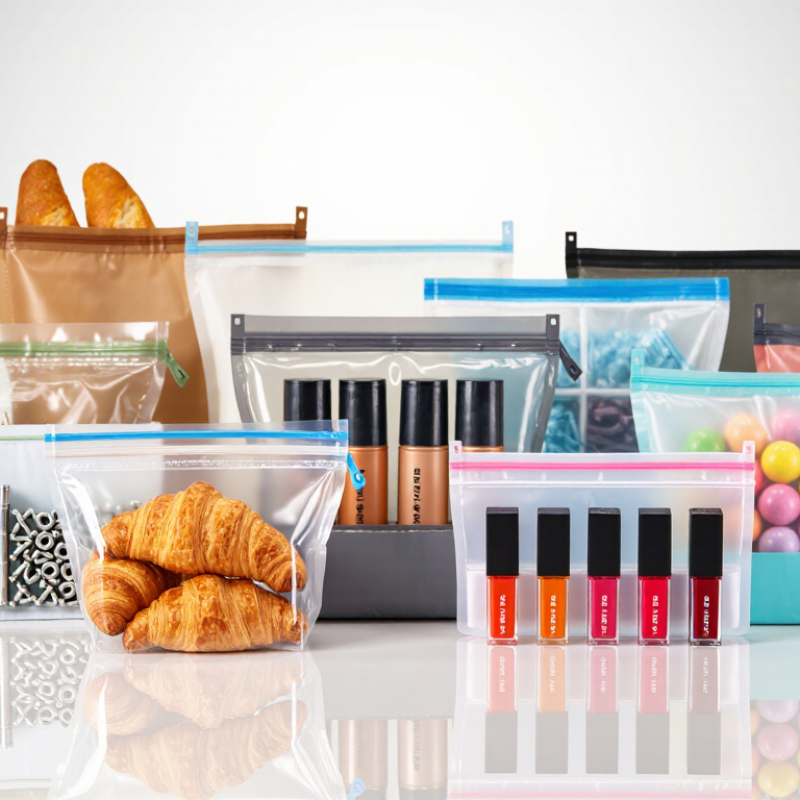
Wholesale buyers should match zipper bag construction to product behavior, not appearance. For clothing, linens, and small accessories, clear LDPE or PE bags offer flexibility, visibility, and low unit cost. A resealable slider or press-to-close zipper helps reduce returns caused by dusty or damaged goods. The Flexible Packaging Association reported that the U.S. flexible packaging market reached about $39.3 billion in 2022, showing strong demand for adaptable packaging formats.

Dry foods, powders, and household components usually need stronger protection. Stand-up pouches with gussets provide shelf stability and better cube efficiency during transport. For products sensitive to moisture, oxygen, or light, multilayer barrier bags are more suitable. Aluminum-coated or foil-laminated structures can extend quality, but they may complicate recycling. The Packaging Association’s sustainability research repeatedly identifies material complexity as a major recycling challenge.

For hardware, craft supplies, and heavier items, choose thicker PE film with reinforced seams. A hang hole or flat bottom can improve retail handling. Test the zipper after repeated opening, not just once. Small details matter. In warehouse sampling, a bag that tears at the corner creates more labor than its lower price saves. Buyers should compare thickness, seal strength, zipper performance, and carton volume across at least three samples. The cheapest option may fail. A thinner bag may also reduce material use, but only when it survives real handling. Industry reports offer useful direction, yet product testing remains necessary.

10 Best Zipper Bags for Wholesale Buyers? - Which Zipper Bag Types Are Best for Different Products?

Rank Zipper Bag Type Typical Material Structure Best-Suited Products Key Protection Wholesale Advantages Important Limitations
1 Stand-Up Zipper Pouch PET/PE, PET/CPP, or laminated multilayer film Snacks, coffee, pet treats, dried fruit, grains, and powders Moisture, dust, odors, and moderate oxygen exposure Strong shelf presence, efficient storage, and broad size availability Less suitable for sharp-edged products unless a puncture-resistant structure is selected
2 Flat Three-Side-Seal Zipper Bag PE, PP, PET/PE, or laminated flexible film Candy, spices, seeds, small hardware, samples, and refill products Basic moisture and contamination protection Material-efficient, lightweight, easy to pack, and usually economical at scale Does not stand upright and offers less display visibility than a gusseted pouch
3 Gusseted Zipper Bag PE or laminated PET/PE and PET/CPP structures Bulk snacks, pet food, textiles, cleaning products, and larger dry goods Good load containment and protection from dust and moisture Higher capacity without proportionally increasing the front-panel width Requires accurate filling to maintain stability and a neat appearance
4 Clear PE Reclosable Bag Low-density polyethylene or linear low-density polyethylene Apparel accessories, stationery, small parts, craft supplies, and non-food items Dust, splash, and handling protection with product visibility Flexible, lightweight, transparent, and suitable for many standard sizes Lower oxygen and aroma barrier than foil or metallized laminate bags
5 Foil-Laminated Zipper Bag PET/Aluminum foil/PE or PET/foil/CPP laminate Coffee, tea, nutritional powders, spices, dried foods, and light-sensitive products High barrier against light, oxygen, moisture, and aroma transfer Supports longer shelf-life requirements and premium product positioning Usually costs more and is not transparent; foil can crease during handling
6 Metallized Film Zipper Bag PET/metallized PET/PE or metallized BOPP/PE Snack foods, confectionery, granola, powders, and promotional packs Improved light, moisture, and oxygen protection compared with clear film Often provides a practical balance between barrier performance and cost Barrier performance varies by film grade and is generally below a sound foil laminate
7 Kraft Paper-Laminated Zipper Bag Kraft paper laminated with PE, PET, or a barrier film Dry foods, bakery ingredients, coffee, herbs, gifts, and natural-style products Basic to high protection depending on the inner laminate Creates a paper-based appearance and provides a printable outer surface Paper alone is not a moisture barrier; recycling depends on the final laminated structure
8 Spout Zipper Pouch Multilayer PE-based film or laminated barrier film with a fitted spout Sauces, purees, liquid concentrates, gels, and semi-liquid products Leak resistance, contamination protection, and controlled dispensing Convenient for consumers and can reduce packaging weight compared with rigid containers Higher component and filling costs; seal and spout compatibility must be tested
9 Slider Zipper Bag PE film with a plastic slider closure Frozen foods, household storage, craft materials, garments, and reusable kits Dust, spill, and odor containment with convenient repeated opening Easy for users with limited dexterity and suitable for repeated access Slider components add cost and may be damaged by excessive force or overfilling
10 Child-Resistant Zipper Bag PE or multilayer film with a specialized child-resistant closure system Regulated products, household chemicals, and items requiring controlled access Improved access control, plus moisture and contamination protection Useful where packaging regulations require specialized opening features Must be tested and certified for the target market; higher unit cost and more complex production

Note: Actual performance depends on film thickness, laminate structure, zipper design, seal quality, filling conditions, and applicable food-contact or product-safety requirements.

How to Compare Zipper Bag Materials, Sizes, and Closure Quality

Wholesale buyers should compare zipper bags by resin, thickness, dimensions, and closure design.

LDPE feels soft and flexible, while HDPE is stiffer and often resists moisture well. LLDPE can improve puncture resistance, but supplier formulas differ.

The Flexible Packaging Association reported US flexible packaging sales of $39.6 billion in 2022. That scale shows strong demand, not guaranteed quality. OECD’s Global Plastics Outlook reports that packaging creates about 40% of global plastic waste, so material efficiency matters.

Size checks should include the usable interior, not only the outside measurement.

Leave space above the product. A tight fit can strain corners and weaken the zipper track. Request film thickness in microns, dimensional tolerances, and sample measurements from several production lots.

For quality control, inspect cloudy areas, uneven edges, and difficult opening. Small details matter. A thicker bag is not automatically stronger; poor film blending or weak seals can still cause failure. This is an easy mistake.

Closure quality deserves separate testing.

Ask suppliers to provide opening-force results, leak-test records, and production samples.

ASTM D3078 offers a recognized bubble-emission method for detecting gross leaks, although it cannot replace real-use testing. Run repeated opening cycles with the intended contents. Check whether the slider, press-to-close profile, or seal remains aligned.

A reliable supplier should explain test conditions clearly, not simply claim “premium quality.” Procurement teams should also verify food-contact or other applicable documentation for the intended market.

What Features Define the Ten Best Zipper Bags for Wholesale Orders?

10 Best Zipper Bags for Wholesale Buyers?

What Features Define the Ten Best Zipper Bags for Wholesale Orders?

Wholesale buyers should judge zipper bags by performance, not appearance alone. The Flexible Packaging Association’s 2024 State of Flexible Packaging report valued the United States flexible packaging market at approximately $40.9 billion in 2023. That scale increases pressure on suppliers to deliver consistent quality, efficient packing, and measurable specifications.

A dependable zipper bag needs stable film thickness, clean edges, and a closure that opens smoothly but resists accidental separation. Strong heat seals matter too. ASTM D3078 leak testing can help identify weak seals through bubble-emission testing.

For moisture-sensitive goods, buyers should compare oxygen and water-vapor transmission rates, rather than trusting vague claims like “high barrier.” Useful options include:

  • clear windows
  • writable surfaces
  • rounded corners
  • tear notches

Small details improve warehouse handling.

Wholesale orders also need repeatability. Ask for dimensional tolerances, zipper-cycle results, sample approvals, carton counts, and lot traceability.

Food-contact applications require suitable declarations for the destination market.

Recycled content may support sustainability goals, but it can affect clarity, stiffness, or seal performance. Thicker is not always better. It may increase shipping weight and cost.

No zipper survives careless overfilling. Buyers should test real products under stacking, vibration, temperature changes, and repeated opening.

One weakness remains common: samples often perform better than mass production. Independent inspection is worth considering.

How to Evaluate Suppliers, Prices, Customization, and Bulk Value

10 Best Zipper Bags for Wholesale Buyers?

How to Evaluate Suppliers, Prices, Customization, and Bulk Value

A reliable zipper bag supplier should provide more than attractive sample photos. Request material specifications, zipper dimensions, film thickness, production capacity, and recent quality records. Ask for a physical sample before discussing large quantities. Test the seal repeatedly, fill the bag, and check whether the zipper opens smoothly after several uses. Small failures become expensive at scale.

Compare the complete landed cost, not only the quoted unit price. Include tooling, printing plates, packaging, freight, inspection, and possible storage fees. A low quote may hide thinner film or inconsistent zipper alignment. I once viewed a cheaper offer as better value, but uneven seals created extra sorting work. That mistake changed how I compare suppliers. Delivery terms and defect-replacement policies matter too.

Customization can improve product appeal, but every option affects cost and lead time. Confirm exact dimensions, transparent areas, colors, print positions, hanging holes, and carton quantities in writing. Request a digital proof and a pre-production sample. For bulk value, calculate usable bags after defects, not just the ordered quantity. Check whether the supplier can repeat the same specifications in future batches. Large orders need stable quality. Cheap volume alone is not enough.

10 Best Zipper Bag Types for Wholesale Buyers

Comparison based on price efficiency, seal durability, customization potential, minimum-order flexibility, and bulk value. Scores use a 0–10 buyer evaluation scale; higher scores indicate stronger overall wholesale value.

For supplier evaluation, prioritize consistent film thickness, reliable zipper performance, transparent pricing, practical MOQs, and customization capabilities before placing a bulk order.