Choosing the right Commode Liners for bulk buying requires more than comparing unit prices. A low-cost liner may appear attractive, yet weak seams can cause leaks during removal. In real purchasing situations, small details matter. Check the liner’s dimensions against the commode opening and bucket depth. A loose fit can fold inward. An overly tight fit may tear around the rim. Look for durable plastic, secure handles, and reliable odor-control features. The liner should also hold expected waste without stretching dangerously.
Bulk buyers should request samples before approving a large shipment. Test several liners with water, tissue, and simulated daily use. Inspect the bottom seal after lifting each filled liner. Measure how easily staff can tie and remove it while wearing gloves. Packaging deserves attention, too. Clearly labeled rolls reduce storage mistakes. Compact cartons can save valuable shelf space. Ask suppliers about production consistency, delivery capacity, quality checks, and replacement policies. Written specifications are safer than verbal promises.
Not every “heavy-duty” claim is meaningful. Ask for measurable information. Film thickness, load guidance, material composition, and package quantity should be clearly stated. Environmental claims also need careful review. Some products sound greener than they are. This part is easy to overlook. A practical decision balances safety, handling, storage, cost, and user comfort. Even experienced buyers can misjudge demand. Start with a controlled order, record actual consumption, and adjust future volumes. The best choice is not simply the cheapest Commode Liners option. It is the one that performs consistently, arrives reliably, and supports clean, efficient routines.
Before ordering in bulk, describe the actual care routine. Count daily uses, users, collection points, and expected delivery intervals. A small facility may need different quantities than a busy care center.
Measure the commode bucket carefully. Record its rim width, depth, shape, and usable capacity. The liner should fit securely without stretching over sharp edges. Check whether absorbent material is needed for liquid control. Some applications require stronger leak resistance, while others need simple containment. Keep the purpose clear.
We once estimated demand from average weekly use and ordered too little. That mistake caused rushed purchasing and extra handling. Add a reasonable reserve, but avoid excessive stock that occupies valuable storage space.
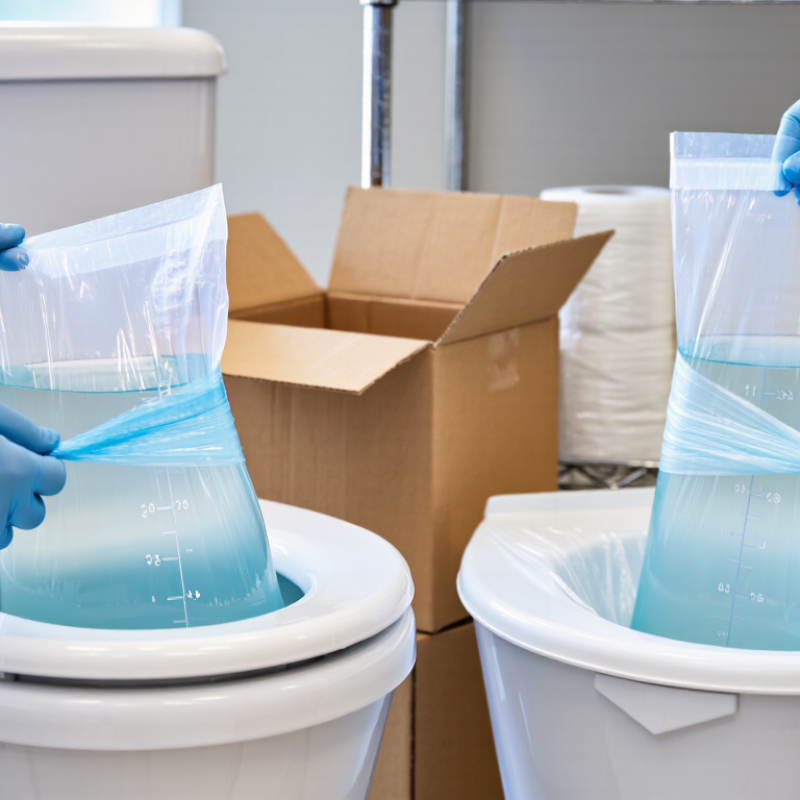
Test a small sample first. Fill it with a measured amount of water and inspect the seams, fit, and removal process. It should stay stable during lifting and tying.
Staff feedback matters, especially after repeated use. Ask suppliers for material details, dimensions, capacity, packaging data, and quality records. Compare samples using the same checklist.
Review the results with the people who handle the liners every day. Their practical experience may reveal problems that product sheets miss.

When buying commode liners in bulk, compare material before price. LDPE liners usually offer flexible handling and good tear resistance. HDPE can feel stiffer, but it often supports heavier loads. Compostable materials may reduce plastic use, yet their moisture resistance varies widely. Check independent test results, not only “biodegradable” wording. Fit comes first.
Size should match the commode bucket, rim, and support frame. A liner that stretches too tightly may split at the rim. One that hangs loosely can fold into the waste. Measure twice. Capacity ratings also need careful reading. A stated 8-gallon capacity may describe the bag’s open volume, not its safe working load. Leave headspace for tying and movement. I have seen purchasing teams choose larger liners, then face higher storage costs and awkward handling.
The World Health Organization reports that about 85% of healthcare waste is general, non-hazardous waste, while 15% is hazardous. Its 2024 healthcare-waste guidance also stresses segregation at the point of use. This supports choosing liners for the actual waste stream, rather than using one size everywhere. WHO and UNICEF reported that only 61% of healthcare facilities had basic healthcare-waste services in 2021. Reliable liners therefore need clear capacity ratings, leak testing, and documented material specifications. ASTM D6400 may help evaluate compostable claims, but certification does not guarantee suitable commode performance. Review samples, fill them with realistic loads, and record failures before placing a large order.
Compare common liner sizes by nominal capacity, then select the material and thickness that match handling, leak-control, and disposal requirements.
Stiffer and more puncture-resistant than LDPE at comparable thickness. Suitable when liners need easier opening and handling.
More flexible and stretchable, making it useful for fitting irregular containers. Choose adequate thickness for heavier or sharper waste.
Often based on PLA, PBAT, or starch blends. Confirm the required composting conditions and local disposal rules before bulk purchasing.
Capacity conversions use 1 US gallon = 3.785 liters. Actual usable capacity depends on liner dimensions, drawstring design, fill level, and container shape. For bulk orders, verify dimensions and leak testing with a sample before approving the full shipment.
When buying commode liners in bulk, inspect leak protection before comparing prices. A reliable liner should use a strong, sealed base and absorbent material. Check the seams carefully. Weak edges may fail when the liner holds liquid for several hours. I prefer testing a small sample first. Fill it with water and lift it gently. This simple check reveals stretching, dripping, or poor sealing.
Fit matters more than many buyers expect. The liner should sit securely inside the commode without folding into the waste area. Loose edges can cause spills during removal. Oversized liners may seem safer, but extra material can bunch and tear. Measure the bowl opening and compare it with the supplier’s dimensions. Do not trust appearance alone. I once chose a larger size and created more handling problems.
Odor control depends on closure design, material, and storage time. Look for liners with secure tie handles or another dependable sealing method. Odor-reducing layers can help, but they should not hide weak leak protection. Test a closed liner in a ventilated storage area for several hours. Notice whether smells escape around the seal. Also check the package for clear instructions and consistent liner thickness. Bulk savings mean little if every tenth liner performs differently. Reliable records help identify that problem early.
When buying commode liners in bulk, inspect the packaging before comparing prices.
Each liner should be individually sealed, with clear dimensions, material details, and disposal instructions.
Cartons should show batch numbers and packing dates.
These details make stock rotation easier and help trace problems.
A strong seal matters.
Loose edges may expose liners to dust and moisture during transport.
Storage conditions deserve equal attention.
Keep cartons on raised pallets, away from bathrooms, drains, and direct sunlight.
A dry, ventilated room is safer than a crowded warehouse corner.
Leave space between cartons and walls.
This reduces moisture buildup and makes routine inspections possible.
Do not stack cartons higher than the supplier recommends.
Crushed packaging can damage liners before use.
A clean carton is not proof of perfect contents.
Randomly open several cases and check thickness, fit, absorbent material, and odor.
One inspection can still miss a weak batch.
Supplier reliability should be tested before placing a large order.
Request samples from the actual production lot, not only presentation samples.
Ask for quality records, batch traceability, lead times, and written replacement procedures.
Confirm how shortages or damaged cartons are handled.
Communication speed is useful, but consistent delivery matters more.
A low price may hide unstable sizing or delayed shipments.
Forecasts can also be wrong, especially when demand changes suddenly.
Keep a small reserve and review supplier performance after every delivery.
Bulk buying should begin with actual usage, not the lowest carton price. Count the liners used each day, then multiply that number by your planned service period. Add a small allowance for damaged packaging, incorrect fitting, and unexpected demand. A five percent reserve is practical, but busy facilities may need more. It depends on experience.
Compare the complete cost per liner. Include the product price, delivery charge, storage materials, and any required dispensing equipment. For example, a carton costing 240 dollars with 1,000 liners costs 0.24 dollars per liner before delivery. If shipping adds 35 dollars, the real cost becomes 0.275 dollars. Small charges can change the decision. Check pack counts carefully.
Quality also affects the total budget. Look for liners that fit the commode securely, resist leakage, and include reliable closure features. A cheaper liner may create cleanup work or increase replacement use. Ask for samples before placing a large order. Test them with the actual commode shape and daily routine. My first bulk calculation ignored storage space, which caused unnecessary handling problems. That mistake was avoidable. Review shelf life, carton dimensions, and reorder timing before committing. A slightly higher unit price may be wiser when it reduces waste and staff time.