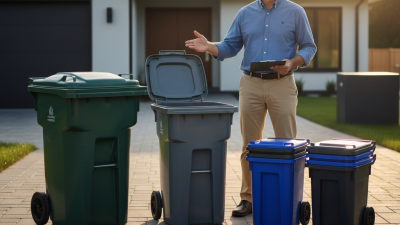
How to Choose the Best Garbage Totes?
Choosing the best Garbage Totes is less about appearance and more about daily performance. A tote may look sturdy in a product photo, yet feel awkward when filled. The right choice depends on capacity, material, handles, lid design, mobility, and cleaning needs. A small kitchen may need a compact 20-gallon tote, while a busy workshop could require a larger container with reinforced walls. Measure the storage area first. A few inches matter.
In real use, weight distribution becomes important. Smooth wheels can protect your back when the tote holds wet waste, food scraps, or packaging. Tight-fitting lids help limit odors, moisture, and pests. However, an overly tight lid may become frustrating during frequent disposal. Check the manufacturer’s load guidance, wall thickness, and temperature limits. Certified materials can also matter when the tote may contact damp or corrosive waste. Do not assume that a higher price guarantees better durability.
Think about cleaning, too. Deep grooves and narrow handles can trap residue. Wide openings are easier to wash with a hose or long brush. I once chose a tote with excellent wheels but ignored its awkward lid, and that small mistake affected every use. It is easy to focus on capacity and overlook comfort. Compare verified specifications, user experiences, and your local collection requirements before buying. The best Garbage Totes should fit your space, waste volume, handling habits, and maintenance routine without creating new problems. There is no perfect model. The practical choice is usually the one you can lift, clean, and use confidently.
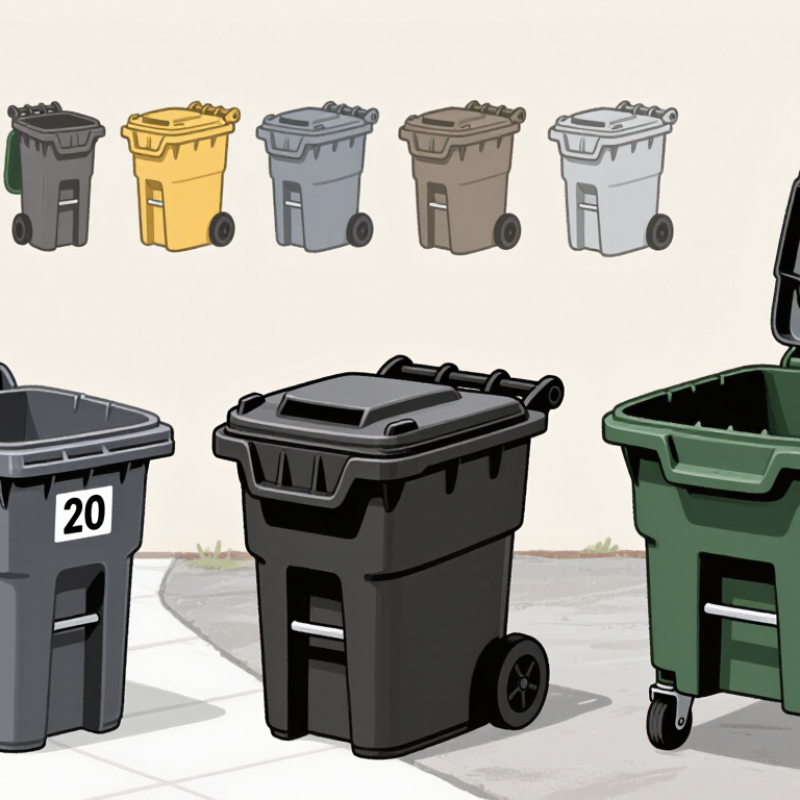
Define Garbage Tote Types, Capacities, and ANSI Z245.60 Standards
How to Choose the Best Garbage Totes?
Choosing a garbage tote starts with its collection method. Two-wheel totes suit homes, offices, and narrow service areas. Four-wheel containers work better for kitchens, warehouses, and shared facilities.
The U.S. EPA reported 292.4 million tons of municipal solid waste in 2018.
That equals about 4.9 pounds per person daily. These figures show why capacity planning matters.
Common tote capacities include 120, 240, and 360 liters for two-wheel models. Larger four-wheel containers often hold 660, 770, or 1,100 liters.
A 240-liter tote may serve a small office for several days. Food waste can require more frequent collection because moisture increases weight quickly.
Do not select capacity from volume alone. A full container may exceed safe handling limits before it looks full. This is where I still see mistakes.
ANSI Z245.60 focuses on the dimensions of mobile waste and recyclable-material containers. It helps align container geometry with compatible lifting equipment.
The standard does not replace local hauler requirements. Confirm lid clearance, wheel spacing, lifting points, and maximum loaded weight.
The current edition should be checked before procurement. A tote can meet a dimensional standard yet fail on site. Measure the collection truck interface. Then test one loaded unit.
Match Tote Capacity to Waste Volume: 20, 32, 44, and 64 Gallons
How to Choose the Best Garbage Totes?
Choosing a garbage tote starts with your daily waste volume, not the largest available size. A
20-gallon tote suits bathrooms, small offices, and light desk waste. It stays easier to lift and clean. A
32-gallon tote works well for kitchens, break rooms, and compact work areas. It offers useful capacity without becoming awkward.
A 44-gallon tote fits busier spaces, including workshops, cafeterias, and shared facilities. Choose a
64-gallon tote when waste accumulates quickly or collection happens less often. However, extra capacity can encourage overfilling and make movement difficult. In practice, keeping the tote about
75 to 80 percent full supports safer handling. Wet waste also weighs more than it looks. I have found that volume estimates often fail when food scraps or packaging are mixed together.
Tips:
Track one week of waste before buying.
Measure the available storage space.
Check the tote’s empty weight, lid fit, and wheel quality.
Use a liner that reaches over the rim without bunching.
For heavy waste, a smaller tote may be safer than a full-size container.
Leave clearance around the lid.
This prevents contact with walls and makes cleaning easier.
Reassess after a month; your first choice may need adjustment.
Evaluate HDPE Construction, Wall Thickness, and UV Resistance
How to Choose the Best Garbage Totes?
Evaluate HDPE Construction, Wall Thickness, and UV Resistance
Garbage totes face impacts, moisture, chemicals, and repeated lifting. The U.S. EPA reported 292.4 million tons of municipal solid waste generated in 2018. That volume makes durable handling equipment essential. High-density polyethylene, or HDPE, offers useful impact resistance and low water absorption. Rotational molding can create a seamless body, reducing weak joints. Inspect the rim, base, handles, and lid hinges carefully. These areas usually receive the hardest abuse.
Wall thickness matters, but thicker is not automatically better. I once treated thickness as the whole answer. That was a poor assumption. Uneven walls can fail sooner than a slightly thinner, well-formed shell. Ask for measured thickness at corners and the base, not only an average figure. Compare impact results under ASTM D256 or equivalent testing. Also review load ratings under realistic temperatures. Cold conditions can make plastic less forgiving.
Tips: Request UV-exposure evidence before outdoor use. ASTM G154 and ISO 4892-3 provide recognized methods for accelerated weathering tests. Look for retained impact strength, color stability, and cracking observations after exposure. UV-stabilized HDPE is preferable, but additives do not make a tote indestructible. Place containers away from constant sunlight when possible. Check them monthly for chalking, brittleness, warped lids, or fading. A small crack today can become a failure tomorrow.
Compare Two- and Four-Wheel Designs for Loads Up to 250 Pounds
How to Choose the Best Garbage Totes?
When handling loads up to 250 pounds, wheel design affects control, effort, and stability. A two-wheel tote tilts toward the user, placing much of the weight near the axle. Its angled movement works well across pavement, compact soil, and narrow service paths. It also needs less storage space. The drawback is clear. The operator must support part of the load while turning or crossing uneven ground.
A four-wheel tote keeps the container upright and spreads weight across four contact points. This design reduces lifting force and feels steadier beside loading areas or long corridors. Swivel casters improve turning, but they may wander on cracked pavement. Fixed wheels track better over distance. Brakes are valuable on slopes, especially when the tote is filled with dense material. However, four wheels do not automatically mean easier handling.
I once chose a tote by capacity alone and ignored its handle height. My wrists became tired after several short trips. That mistake still influences my checks. A 250-pound rating may describe a stationary load, not comfortable movement. Check the stated capacity, wheel diameter, axle strength, and floor clearance. Measure doorways and turning spaces before purchase. For repeated heavy loads, test a filled unit on the actual route. A small incline can reveal more than a product sheet.
How to Choose the Best Garbage Totes?
Estimated rolling force for two- and four-wheel designs at loads up to 250 pounds.
How to read this chart: Lower rolling force generally means less push or pull effort on a level, hard surface. The estimates use the standard relationship F = Crr × W, with rolling-resistance coefficients of 0.04 for a two-wheel design and 0.03 for a four-wheel design. Actual performance varies with wheel material, surface condition, slope, and load distribution. A 250-pound load rating should always be confirmed from the tote’s specifications.
Check Lid Fit, Ergonomics, Mobility, and Local Collection Requirements
Choosing the best garbage tote starts with the lid. It should close firmly without requiring excessive force. A secure lid helps contain odors, rainwater, and loose waste. Test the hinge with one hand. Does it open smoothly while carrying a full bag? A lid that looks strong may still become awkward after repeated use. I have found that small design flaws become obvious on collection day.
Ergonomics matter when the tote is heavy. Look for comfortable handles with enough space for gloved hands. Rounded edges can reduce pressure on your fingers. The container should remain stable when lifted, even if the contents shift. Mobility also deserves careful attention. Two sturdy wheels usually roll better over pavement, but they may struggle on gravel or grass. Check the wheel size and balance near your usual storage area. Bigger is not always better.
Tips: Before buying, measure the space beside your home. Ask your local collection service about approved tote sizes, lid colors, and maximum weights. Some areas require handles to face the street. Others limit containers placed near curbs. These details are easy to overlook. Also, test the empty tote in person if possible. It may feel light in a store but become difficult when filled. Allow room for imperfect habits, because real households rarely load waste evenly.