Leave Your Message

2026 Top PE Plastic Wrap Manufacturers for Global Buyers?

Global buyers need more than a low quoted price when choosing PE Plastic Wrap manufacturers. Film thickness, stretch, puncture resistance, roll consistency, and dependable lead times can shape performance from the packing line to delivery. A sample roll may look clear and smooth under warehouse lights, yet unwind unevenly or tear at a sharp carton edge. Small tests matter.

Packaging specialist Maya Chen offers this illustrative, newly written line—not a sourced quotation: “A good wrap earns trust on the line, one consistent roll at a time.” That principle guides this overview of manufacturers serving international buyers. It also keeps attention on measurable evidence, rather than polished claims alone.

The 2026 comparison considers product range, customization, quality controls, production capacity, export experience, and communication. Buyers should confirm film specifications, request current samples, and check how suppliers document batch consistency. Ask practical questions. Can the supplier hold a stable gauge across repeat orders? Are core sizes and pallet arrangements suited to your equipment and receiving space? Does the quoted lead time include production and shipping preparation?

No supplier suits every operation. A stretch film designed for hand wrapping may not fit an automated line, and the lowest price may conceal costly variation. This guide is a starting point, not a substitute for testing. Use it to shortlist manufacturers, verify claims directly, and compare the details that matter to your packaging process.
2026 Top PE Plastic Wrap Manufacturers for Global Buyers?

Understanding PE Plastic Wrap and Its Main Applications

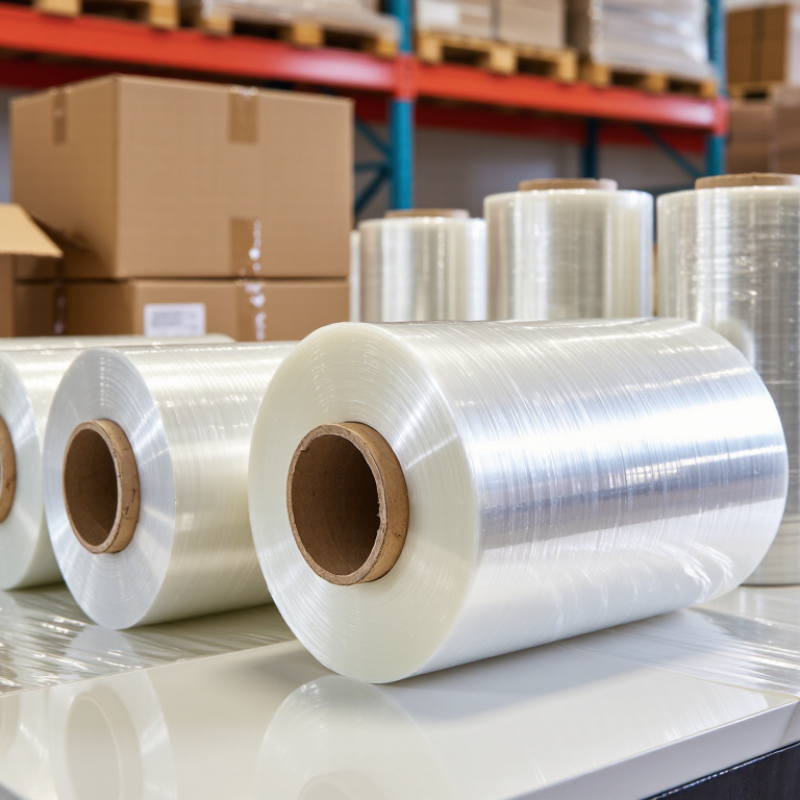
PE plastic wrap is a flexible polyethylene film used to cover products or hold grouped items together. Its performance depends on thickness, stretch, cling, and puncture resistance. Food-service cling film can cover bowls, trays, or produce, while pallet stretch film holds cartons together during storage and transport. These products are related, but they are not interchangeable. Check the intended-use specification. Film that clings well to a plate may tear against a sharp carton edge or loosen during a long journey. Small details matter.

Warehouses use stretch film to stabilize mixed cartons on pallets and reduce movement during handling. In shops and kitchens, suitable cling film helps cover containers and limit exposure to air. Food contact requires a grade intended for that use; appearance alone proves little. Match film width and thickness to the load, and test the wrapping method on actual cartons. Tight wrapping can help, but too much tension may crush lighter packaging. It is not magic. Buyers sometimes focus on price and overlook roll consistency, yet uneven film can waste time on the packing line. Disposal options also vary by local collection systems, so recyclability should be checked rather than assumed.


Key Criteria for Evaluating PE Plastic Wrap Manufacturers

Choosing a PE plastic wrap manufacturer requires more than comparing quoted prices. Start with the intended use: pallet loads and general packaging may need different film properties. Ask for technical data covering thickness, width, stretch, puncture resistance, and roll length. Check samples against the stated specifications. A caliper and a loaded pallet can reveal problems a brochure may miss. Small detail, big difference.

Review quality controls and production consistency. Ask how the manufacturer checks thickness variation, edge defects, winding tension, and batch records. Request recent test reports and samples from regular production, not specially prepared rolls. Confirm lead times, minimum order quantities, and how complaints are handled. Clear records matter. A low price can become costly if film breaks during wrapping or deliveries arrive unevenly. Still, no checklist removes every risk; practical trials can expose surprises.

Tips: Run a short trial with your own dispenser and typical load. Record film use per pallet, breaks, and load stability. Compare at least two batches under the same conditions. Ask direct questions, then check whether documents support the answers. If something seems vague, pause. A supplier’s responsiveness helps, but it cannot replace measurable performance.

2026 Top PE Plastic Wrap Manufacturers for Global Buyers? - Key Criteria for Evaluating PE Plastic Wrap Manufacturers

Use this comparison framework to assess suppliers of polyethylene (PE) stretch, cling, and protective films. Performance targets depend on film type, application, and buyer specification; verify values against product samples, test reports, and the final purchase specification.

Evaluation dimension What buyers should check Useful data or benchmark Evidence to request Suggested weight
Product and application fit Confirm whether the offer is hand or machine stretch film, cling film, or another PE protective wrap. Check load type, wrapping method, storage conditions, and intended contact with food, if applicable. There is no single PE wrap specification that suits every use. Film structure, thickness, cling, strength, and roll dimensions should be matched to the application. Product data sheet, application recommendations, and samples tested on the buyer’s equipment or packaging line. 15%
Film consistency and mechanical performance Assess thickness consistency, tensile behavior, puncture or impact resistance, tear behavior, elongation, and load retention where relevant. Set numerical acceptance limits in the purchase specification. ASTM D882 covers tensile properties of thin plastic sheeting; ASTM D1709 covers impact resistance by the free-falling dart method; ASTM D1922 covers tear resistance of plastic film and sheeting. Recent test reports identifying the method, specimen conditioning, sample size, results, and product grade. Confirm that reported methods match the agreed specification. 20%
Dimensions and roll quality Verify nominal and actual thickness, width, roll length or net weight, core dimensions, winding quality, and packaging protection. Define tolerances with the supplier before ordering; there is no universal tolerance suitable for all film grades and applications. Specify units and measurement method to avoid ambiguity. Written product specification, inspection records, sample-roll measurements, and a documented process for handling out-of-specification rolls. 10%
Raw-material and formulation control Ask how resin grades, additives, recycled content (if any), and formulation changes are controlled. Check that material choices suit the required performance and regulatory market. PE film properties depend on resin selection, formulation, and processing. Recycled-content claims and food-contact suitability should be supported by documentation specific to the product and destination market. Material declarations, change-control procedure, batch traceability, and supporting documentation for any recycled-content or compliance claim. 10%
Quality management and traceability Evaluate incoming-material checks, in-process controls, final inspection, complaint handling, corrective actions, and lot identification. A quality certificate is useful but does not replace product-specific inspection and verification. Confirm the scope and validity of any certification directly with its issuer. Quality-system certificate and scope, sample inspection plan, batch records, and a documented nonconformance and corrective-action process. 15%
Food-contact and market compliance For food-contact use, identify the destination market, food type, temperature, and conditions of use. Confirm that compliance covers the exact film and intended application. Examples of relevant frameworks include U.S. FDA regulations such as 21 CFR 177.1520 for olefin polymers and EU Regulation (EU) No 10/2011 for plastic materials and articles intended to contact food. Applicability depends on product and use conditions. Product-specific declaration of compliance, supporting migration or other required test reports, and documentation for the target jurisdiction. Seek regulatory review where needed. 10%
Production capacity and delivery reliability Check available production lines, capacity allocation, lead time, minimum order quantities, peak-season planning, and export experience for the required format. Capacity and lead time are supplier- and order-specific. Compare confirmed output and delivery commitments with the buyer’s forecast rather than relying on general claims. Written production schedule, recent on-time delivery record, capacity statement, and an agreed escalation plan for delays. 10%
Commercial terms and total cost Compare price on a like-for-like basis, including film specification, roll quantity, packaging, tooling or setup charges, freight, payment terms, and after-sales support. A lower price per roll may not mean a lower cost per packaged load. Evaluate film consumption, performance in use, waste, and downtime alongside quoted price. Itemized quotation, Incoterms® 2020 delivery term, payment terms, sample-order policy, and a written warranty or claims procedure. 10%
Total suggested evaluation weight 100%

Note: The weights are a buyer-side evaluation template, not an industry certification or ranking. Adjust them to the product, end use, and destination-market requirements.

Leading PE Plastic Wrap Manufacturers for Global Buyers in 2026

Leading PE Plastic Wrap Manufacturers for Global Buyers in 2026

Global buyers should assess manufacturers by measurable film performance, not catalog claims. Compare thickness tolerance, stretch recovery, puncture resistance, cling, roll length, and unwind consistency. Ask for recent test results and batch traceability. Small details matter. Film that tears at pallet corners can increase material use and handling time.

The OECD’s Global Plastics Outlook (2022) estimates that 460 million tonnes of plastic were produced worldwide in 2019, and 353 million tonnes became plastic waste. Packaging accounted for about 40% of that waste. These figures cover all plastics, not PE wrap alone, but they show why material efficiency and reliable load containment deserve scrutiny. A lower thickness value alone does not prove better performance.

Reliable manufacturers should document resin specifications, quality controls, and shipment consistency. Buyers can test samples on their own wrapping equipment, recording break rates, load stability, and meters per roll. That comparison is useful, but incomplete: one warehouse test may not predict performance on humid or cold routes. Share destination conditions and ask suppliers to disclose test methods, tolerances, and limitations. Some claims remain difficult to verify. Treat them as questions, not guarantees.

Comparing Product Quality, Customization, and Production Capacity

Choosing a PE plastic wrap manufacturer means comparing more than quoted price. Check film thickness, stretch recovery, clarity, and how consistently each roll unwinds. Ask for sample rolls and test them on the equipment that will use them. A film that performs well by hand may behave differently on a fast wrapping line. Small details matter.

Customization should be measurable. Share target width, gauge, roll length, core size, and packaging requirements, then request written specifications before production. Ask how changes are approved and how defects are recorded. Production capacity also needs careful checking. Review typical lead times, monthly output, and the process for handling repeat orders. A large stated capacity is not useful if schedules shift without notice. Request recent production references or quality records where available. I would not rely on a sample alone; it may not reflect a full run. Even good suppliers can have uneven batches, so agree on inspection points and acceptable variation before placing a large order.

How to Verify Suppliers and Plan International Sourcing

A reliable PE plastic wrap supplier should be checked beyond its product catalogue. Ask for the company’s registered details, factory address, and a recent production video. Compare these with the quotation and shipping documents. Paperwork can look polished. A live video call or independent factory inspection can help confirm that the equipment and production lines are real.

Request samples from the same grade you plan to order. Measure film thickness with a gauge, then test stretch, cling, and puncture resistance using your intended packaging. Record the results and compare them with the supplier’s specification sheet. Ask how each batch is inspected and whether test reports can be verified. One sample is not enough; quality can vary between batches. A clean audit still cannot predict every production delay.

Plan the shipment before approving a large order. Confirm minimum quantities, production time, roll dimensions, carton markings, and the agreed delivery terms in writing. Check whether the packaging can withstand a long journey and changing humidity. Ask for a draft packing list and commercial invoice, then have a local customs broker review the details for your destination. Keep a small buffer in your schedule. It may feel overly cautious, but a delayed container can disrupt an entire packaging line.

PE Film Density Ranges: A Specification Check for Global Buyers

These typical reference ranges help buyers compare polyethylene material specifications when reviewing supplier documents. Actual values vary by grade and test method; confirm the exact specification and test conditions in the supplier’s technical data sheet before purchasing.