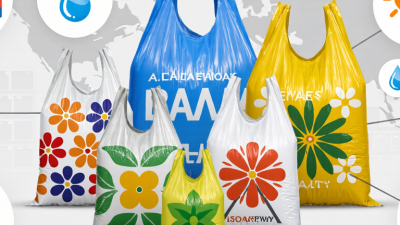
What Are the Best Printed PE Bags from China?
Choosing the best Printed PE Bags from China requires more than comparing factory prices. Buyers must examine film performance, print quality, compliance, and delivery consistency.
The flexible packaging sector remains closely linked to food, retail, logistics, and industrial supply chains. Smithers’ The Future of Flexible Packaging to 2028 identifies sustainability, downgauging, improved barrier performance, and digital printing as important market directions. These trends affect how Chinese manufacturers design and produce PE bags. A lower film weight may reduce material use. It can also weaken sealing if poorly controlled.
Quality begins with the resin and continues through production. Ask whether the supplier uses virgin or recycled polyethylene, and request documented material specifications. Check thickness across several points, not only one sample. Seal strength matters. So does drop resistance.
Printing reveals factory discipline. Look for sharp registration, stable color, readable barcodes, and clean edges. Solvent and water-based ink choices should match the bag’s application. For food packaging, request relevant migration testing and destination-market documentation. OECD’s Global Plastics Outlook stresses the need for stronger lifecycle management and better data transparency across plastics value chains. That makes traceability more than a marketing phrase.
A reliable supplier should provide pre-production samples, inspection records, and corrective-action procedures. Certifications such as ISO 9001 can support confidence, but certificates alone prove little. Verify their scope and validity.
There is no universal best option. A retail bag, courier mailer, and produce sack need different structures. This guide compares Chinese Printed PE Bags through practical criteria, not attractive catalogs alone. Some recommendations may change after testing. That is the honest part. Performance must be measured before a large order.
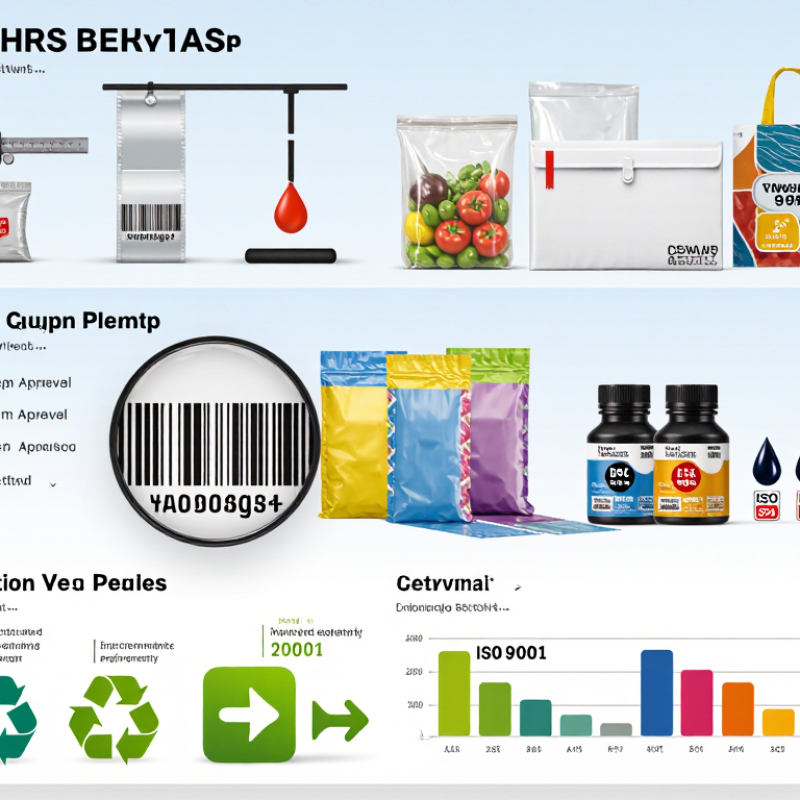
Printed PE Bag Types in China: LDPE, HDPE, and LLDPE Performance Profiles
LDPE, HDPE, and LLDPE create very different printed PE bag profiles. LDPE offers high flexibility, soft handling, and strong heat-sealing performance. It suits produce bags, liners, and retail packaging with curved surfaces. Its density commonly ranges from 0.910 to 0.925 g/cm³. However, thin LDPE film can stretch during printing and reduce text sharpness. I learned that thickness alone does not define quality. That assumption is too simple.
HDPE usually provides greater stiffness, opacity, and puncture resistance. Its typical density ranges from 0.941 to 0.965 g/cm³. It works well for grocery sacks and lightweight carry bags. LLDPE combines good tensile strength with improved tear resistance. Many converters use it for heavier loads or flexible liners. According to PlasticsEurope’s Plastics–the Fast Facts 2024, global plastics production reached 413.8 million tonnes in 2023, increasing pressure for efficient material use. Smithers’ 2024 flexible packaging analysis also highlights downgauging and mono-material structures as continuing industry priorities.
For Chinese suppliers, buyers should request film thickness tolerance, seal-strength results, coefficient of friction, and ink-adhesion testing. A clear 30-micron sample may perform better than a poorly controlled 50-micron bag. Printing quality depends on corona treatment, ink selection, drying, and storage humidity. Ask for ASTM D882 tensile data when comparing LDPE and LLDPE. Ask for drop and puncture results for loaded bags. Small details matter. A practical weakness remains: laboratory results may not match warehouse handling, especially after heat exposure. Testing filled samples is safer than trusting a specification sheet alone.
What Are the Best Printed PE Bags from China?
Printed PE bags are commonly produced from LDPE, HDPE, or LLDPE films. The chart compares representative performance profiles using a relative index, where 100 represents the highest typical midpoint among the three materials.
Typical reference ranges: LDPE density 0.910–0.925 g/cm³, tensile strength 8–25 MPa, elongation at break 300–600%; HDPE density 0.941–0.965 g/cm³, tensile strength 20–35 MPa, elongation at break 100–600%; LLDPE density 0.915–0.940 g/cm³, tensile strength 15–30 MPa, elongation at break 400–800%. Actual results depend on resin grade, film thickness, additives, printing process, and test method.
Flexographic vs. Rotogravure Printing: Color Capacity and Run-Length Economics
What Are the Best Printed PE Bags from China?
For printed PE bags, flexographic and rotogravure printing serve different commercial realities. The Flexible Packaging Association’s 2023 industry report valued the U.S. flexible packaging market at approximately $39.8 billion in 2022. This scale increases pressure for sharp graphics, stable color, and controlled waste.
Flexography usually supports six to ten colors, depending on the Chinese converter’s press. It uses polymer plates, which normally reduce initial tooling costs. Short or medium runs often benefit from this structure.
Rotogravure commonly handles eight to twelve colors and produces smooth solids, fine gradients, and strong repeatability. Its engraved cylinders cost more, but the unit price can fall significantly during long production runs.
A 50,000-bag order may favor flexo. A 500,000-bag order may justify gravure. These are practical examples, not fixed rules. Cylinder charges, bag size, ink coverage, and film thickness can change the calculation. Smithers’ flexible packaging market analysis also highlights continuing demand for high-quality printed films, but color quality alone should not decide the process.
Tips: Ask for a digital proof and a physical press sample. Confirm the exact Pantone references, print repeat, and allowable color variation. Request separate tooling and unit-price lines. The cheaper quote is sometimes less economical after setup waste, reprints, and cylinder storage. A careful buyer should challenge the first recommendation, even when the supplier sounds confident.
How to Compare MOQ, 2–8 Color Printing, Lead Times, and Total Cost per Bag
When comparing printed PE bags from China, start with MOQ rather than unit price. A low quote may require 50,000 bags, while your launch needs only 10,000. Ask whether MOQ applies per size, artwork, or printing cylinder. In factory quotations, 2-color printing usually reduces setup cost, but 8 colors can improve images and gradients. The cost does not rise evenly. Plate fees, ink coverage, registration, and waste matter. A spreadsheet can still lie.
Lead time should include artwork approval, cylinder preparation, production, inspection, and export handling. For a routine order, suppliers may quote 15–30 production days, excluding ocean transport. Confirm the trigger date in writing. It should begin after artwork approval, deposit receipt, and material confirmation. The 2023 World Bank Logistics Performance Index shows that customs and shipment reliability strongly affect delivery performance across trading routes. Plan a buffer, especially before seasonal demand.
Calculate total cost per bag, not factory price alone. Use this formula: bag price, plates, sampling, inspection, inland freight, duty, ocean freight, and expected defects divided by accepted units. The Flexible Packaging Association’s 2024 industry report valued the U.S. flexible packaging market at approximately $42.9 billion in 2023, showing the scale and competitiveness of this sector. Request a pre-production sample and a measurable defect standard. I would also compare one 2-color quote with one 6-color quote. Sometimes the “cheaper” design creates higher waste. That is worth questioning.