How to Choose Biodegradable Plastic Bags for Your Business?
In today’s environmentally conscious market, businesses are increasingly turning to biodegradable plastic bags. Dr. Emily Green, an expert in sustainable materials, states, “Choosing the right biodegradable plastic bag can significantly reduce your environmental impact.” This highlights the growing importance of these bags in various industries.
Biodegradable Plastic Bags are designed to break down more easily than traditional plastic. They offer businesses a practical way to align with eco-friendly practices. However, not all biodegradable options are created equal. The variations in materials and processes can lead to confusion. It is essential for companies to understand what differentiates these bags and how they fit into their sustainability goals.
Many businesses face challenges when selecting biodegradables. Misleading labels can complicate the decision-making process. Furthermore, it’s common to overlook the specific needs of your business. Engaging with experts and doing thorough research can help ensure you make informed choices. The journey to sustainability requires both commitment and knowledge. When choosing Biodegradable Plastic Bags, every detail matters.
Understanding Biodegradable Plastic Types: Materials and Properties
When selecting biodegradable plastic bags for your business, understanding the materials and properties is crucial. Biodegradable plastics can be derived from various sources, including corn starch, PLA (polylactic acid), and PBAT (polybutylene adipate terephthalate). According to the American Bioplastics Council, the global production of bioplastics could reach 2.8 million tons by 2024. This growth highlights the increasing importance of sustainable materials in commerce.
Each type of biodegradable plastic has unique properties. For instance, PLA is compostable, while PBAT is more flexible and durable. In a study by the European Bioplastics Association, it was noted that transparency and strength vary among different biodegradable plastics. Some bags might not easily decompose in landfills, raising questions about their overall sustainability.
It’s vital to assess these characteristics before making a decision. The right choice can enhance your brand’s eco-friendly image. However, you may find that not all biodegradable options perform equally. Some businesses have reported issues with durability or decomposition times. Being aware of these challenges will help you make a more informed decision for your company's needs.
Identifying Certification Standards for Biodegradable Plastics
When choosing biodegradable plastic bags for your business, certification standards play a crucial role. Understanding these standards can help you select products that are genuinely environmentally friendly. Look for certifications like ASTM D6400 or EN 13432, which ensure the bags meet specific biodegradability and compostability criteria. These certifications provide peace of mind and affirm the product's environmental claims.
Tips for assessing certifications include: checking the issuing organization’s credibility. Not all certifications carry the same weight. Poorly recognized standards may mislead you. Also, consider the bag’s material. Some biodegradable plastics break down faster in industrial settings rather than in natural environments.
When sourcing, inspect product details closely. Companies often provide limited information. This lack of transparency can lead to poor choices. Don't hesitate to ask manufacturers for proof of compliance. Engaging with suppliers can reveal much about the bags' environmental impact. Moreover, reflect on your needs. Is a fully biodegradable option necessary, or could a recyclable bag suffice? Make decisions based on your business and environmental goals.
Evaluating Environmental Impact: Decomposition Rates and Effects
When considering biodegradable plastic bags for your business, it's crucial to evaluate their environmental impact, particularly decomposition rates. Studies show that many biodegradable plastics, when exposed to appropriate conditions, may decompose within a few months. In contrast, traditional plastics can linger in the environment for hundreds of years. For example, the European Bioplastics organization states that controlled environments, such as industrial composting facilities, enhance biodegradation efficiency significantly.
Tips: Always check for certifications. Look for bags labeled with ASTM D6400 or EN 13432. These indicate compliance with recognized biodegradability standards.
It's vital to assess the material used in biodegradable bags. Some bags are made from plant sources, while others derive from petroleum-based chemicals. Reports indicate that bags made from renewable sources often decompose faster but might not break down effectively in all environments. This discrepancy can lead to a false sense of security regarding their environmental benefits.
Tips: Evaluate your business's waste management systems. Consider whether your bags will reach a facility that can properly compost or recycle them. If not, rethink your choice.
Understanding the specific environmental impact of biodegradable plastics shapes better choices for your business. The right selection could significantly mitigate landfill waste while supporting sustainability efforts. However, without proper disposal and awareness, even biodegradable bags can contribute to pollution.
How to Choose Biodegradable Plastic Bags for Your Business? - Evaluating Environmental Impact: Decomposition Rates and Effects
| Type of Biodegradable Bag |
Material Composition |
Estimated Decomposition Time |
Environmental Impact Rating (1-5) |
| PLA (Polylactic Acid) |
Corn Starch, Lactic Acid |
90-180 days |
4 |
| PBAT (Polybutylene Adipate Terephthalate) |
Petroleum-based, Biodegradable Additives |
60-120 days |
3 |
| Starch-Based Bags |
Natural Starch, Additives |
90 days |
4 |
| Compostable Bags |
Organic Materials, Additives |
90-180 days |
5 |
| Oxodegradable Bags |
Polyethylene, Oxo-degradable Additives |
1-5 years |
2 |
Comparing Costs: Biodegradable Bags vs. Traditional Plastic Bags
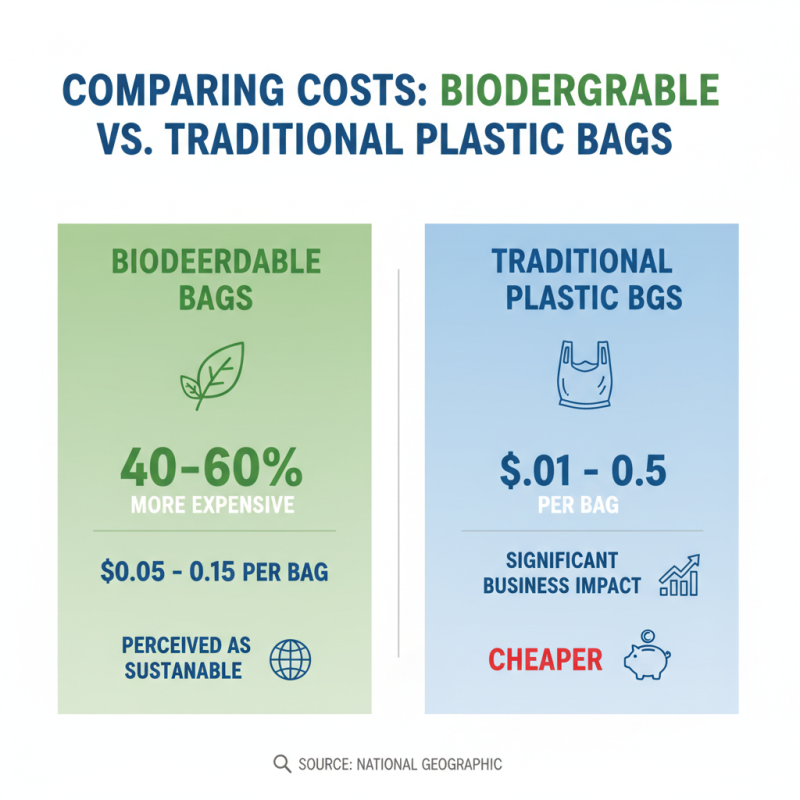
Biodegradable bags are often perceived as a sustainable alternative, but their costs compared to traditional plastic bags warrant a deeper look. Research from the National Geographic estimates that biodegradable bags can cost 40-60% more than their conventional counterparts. While traditional plastic bags cost around $0.01 to $0.05 each, biodegradable options can range from $0.05 to $0.15, significantly impacting a business's bottom line.
Choosing biodegradable bags means balancing budget and environmental impact. Some reports indicate that consumers are willing to pay slightly more for eco-friendly products. A Nielsen survey found that 66% of global respondents were ready to pay more for sustainable options. Businesses need to weigh these consumer sentiments against higher costs.
Tip: Evaluate your customer base. If they prioritize sustainability, the extra cost could yield higher loyalty.
Some biodegradable bags are not fully decomposed in landfills, casting doubt on their effectiveness. A study highlighted that under certain conditions, these bags fail to break down within an expected timeframe. Businesses should investigate certifications and ensure their choice meets composting and biodegradation standards.
Tip: Adopt a trial phase. Test biodegradable bags in specific locations and gather feedback before a full rollout. This reflective approach can refine future procurement decisions.
Assessing Supplier Credibility: Key Industry Certifications and Practices
When selecting biodegradable plastic bags for your business, assessing supplier credibility is crucial. Your choice hinges on the right certifications and industry practices. For instance, look for suppliers that possess certifications like ASTM D6400 or EN 13432. These confirm that their products meet international standards for biodegradability and compostability. A recent study found that 75% of consumers prefer eco-friendly packaging. This shift demands credible suppliers who can substantiate their claims.
Supplier transparency is essential. Investigate their manufacturing practices. Are they sourcing materials sustainably? What are their waste management strategies? Companies often tout eco-friendliness, but not all have robust practices. A survey indicated that 60% of brands mislabel their products as biodegradable. This discrepancy can harm your reputation if not aligned with genuine practices. Evaluate their supply chain, and ensure they’re committed to environmental responsibility.
Don't overlook customer reviews and case studies. They provide insights into supplier reliability. Examine reports discussing the performance of biodegradable bags in real conditions. Interestingly, 80% of businesses report satisfaction with certified bags. However, some face challenges with durability. This signifies a need for rigorous testing and feedback loops to enhance product quality. Balancing eco-credibility with performance is a continual journey for both businesses and suppliers.
Comparative Analysis of Biodegradable Plastic Bags Certifications