Top China Ziplock Bags for Global Buyers?
Discovering the best Ziplock Bags from China has become a priority for global buyers. These bags are essential for storage, travel, and organization. With increasing demand, it's important to identify top manufacturers who provide quality products. However, not all Ziplock Bags are created equal.
Chinese manufacturers offer a diverse range of options, suited for various needs. Some bags excel in durability, while others focus on convenience. It’s crucial to evaluate these features when selecting the right product. Buyers often face challenges like inconsistent quality and varying designs. Researching suppliers can help mitigate these concerns.
Navigating the market is not without its hurdles. Some companies may prioritize cost over quality. This can lead to disappointment upon receiving subpar products. Thus, buyers must be vigilant and use trusted sources. Quality Ziplock Bags can provide peace of mind and meet your storage needs effectively.
Top Manufacturers of Ziplock Bags in China
China has become a major hub for manufacturing ziplock bags. The production capabilities in the country are impressive. According to recent industry reports, China's ziplock bag production accounts for over 60% of the global supply. This statistic underscores its dominance in this sector.
Leading manufacturers in China focus on quality and sustainability. They invest in advanced technologies to enhance production efficiency. The shift towards eco-friendly materials has gained traction. Studies show that consumers increasingly prefer products that minimize environmental impact. This change prompts manufacturers to innovate.
However, the industry faces challenges. Competition is fierce, leading to price wars that affect profit margins. Additionally, quality control can sometimes be inconsistent. Businesses must continually evaluate their processes to ensure reliability. Addressing these issues is essential for maintaining a competitive edge in the global market.
Market Trends in China's Ziplock Bag Industry
China's ziplock bag industry has seen significant growth over the past few years. MarketsandMarkets estimates that the global ziplock bag market will reach $4.3 billion by 2025, with a compound annual growth rate (CAGR) of 5.6%. This wave of demand shows how essential these products are. Convenience and safety drive consumers toward packaging solutions. In China, local manufacturers are responding to this trend. They focus on innovation and eco-friendly materials.
However, challenges remain in this booming industry. Quality control is a critical concern. Reports indicate that around 15% of manufacturers struggle with maintaining consistent quality. This inconsistency can lead to decreased customer satisfaction. Furthermore, adapting to new regulations regarding plastic use poses a threat. The government has implemented stricter guidelines, pushing companies to meet higher environmental standards. Failing to comply could hinder market access.
Investors need to navigate these complexities carefully. Understanding the fluctuating regulations and consumer preferences is crucial. Market research shows that buyers are now more conscientious about product sustainability. Many are willing to pay a premium for eco-friendly options. This trend could reshape the entire landscape of the ziplock bag market in China. Clear insights into these dynamics will benefit both manufacturers and global buyers.
Key Materials Used in Chinese Ziplock Bag Production
In the production of Ziplock bags, key materials play a crucial role in determining their quality and functionality. One primary material is polyethylene, known for its durability and flexibility. This plastic type comes in various forms, such as low-density (LDPE) and high-density polyethylene (HDPE). Both are widely utilized in manufacturing Ziplock bags due to their resistance to moisture. Additionally, they are lightweight, making them a popular choice for packaging.
Another significant material is polypropylene. It offers superior clarity and strength compared to polyethylene. This makes it an excellent option for resealable bags that require secure seals and visibility. While both materials have advantages, they also bring challenges. For instance, producing polyethylene requires energy and can generate environmental concerns. Moreover, although Ziplock bags are often reusable, many consumers discard them, contributing to plastic waste.
Furthermore, additives are often included in the production process. These can enhance performance, such as improving seal strength or UV resistance. However, the long-term effects of these additives on material safety remain under review. As global awareness of environmental issues grows, manufacturers face pressure to innovate responsibly. Balancing quality with sustainability is critical for the future of Ziplock bag production in China.
Top China Ziplock Bags for Global Buyers - Key Materials Used in Chinese Ziplock Bag Production
| Material Type |
Properties |
Usage |
Recyclability |
Market Demand |
| Low-Density Polyethylene (LDPE) |
Flexible, durable, and resistant to moisture. |
Food storage, packaging, and household use. |
Yes, recyclable. |
High |
| Polypropylene (PP) |
Stiffer than LDPE, higher temperature resistance. |
Freezer storage, takeaway food containers. |
Yes, recyclable. |
Medium |
| Polyethylene Terephthalate (PET) |
High strength, excellent moisture barrier. |
Beverage and food packaging. |
Yes, widely recycled. |
High |
| Biodegradable Plastics |
Environmentally friendly alternative, decomposes naturally. |
Eco-friendly packaging, food storage. |
Yes, biodegradable. |
Growing |
Export Statistics of China's Ziplock Bags to Global Markets
The export market for China's Ziplock bags has shown significant growth in recent years. In 2022, China exported approximately 1.5 billion USD worth of these products globally. The United States and Europe remained the largest importers, accounting for over 60% of total exports. This trend indicates a rising demand for convenient packaging solutions across various sectors.
As environmental concerns grow, buyers increasingly seek sustainable options. In response, manufacturers in China are innovating with biodegradable materials. Reports suggest that around 25% of Ziplock bags exported are now made from eco-friendly resources. However, price competitiveness remains a challenge. Many low-cost alternatives flood the market, forcing quality manufacturers to rethink their strategies.
Industry experts indicate that maintaining quality while reducing costs is crucial. Global buyers face pressure to choose suppliers that balance these factors. Moreover, fluctuating raw material prices can impact overall production costs. This dynamic landscape presents both opportunities and challenges for Chinese Ziplock bag manufacturers as they navigate complex global markets.
Sustainability Practices in China's Ziplock Bag Production Sector
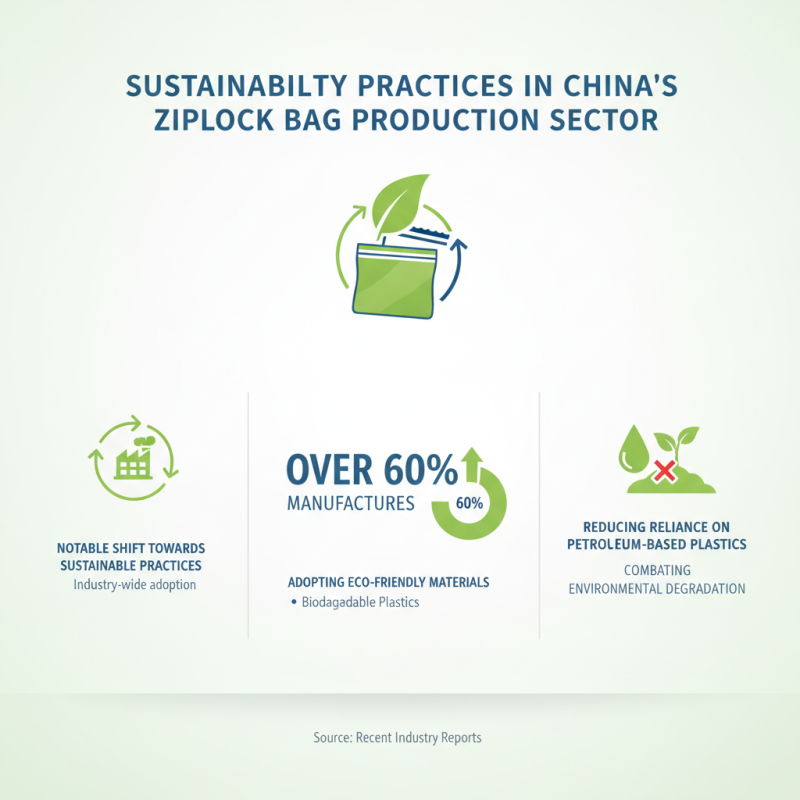
The production of Ziplock bags in China has seen a notable shift towards sustainable practices. According to recent industry reports, over 60% of manufacturers have begun adopting eco-friendly materials, such as biodegradable plastics. These innovations aim to reduce reliance on traditional petroleum-based plastics, which significantly contribute to environmental degradation.
However, the transition is not without challenges. Many producers still face high costs associated with sourcing sustainable materials. Additionally, not all biodegradable options break down in natural environments, leading to potential misclassification. Companies need to invest in better education for consumers about proper disposal methods. This can ensure that eco-friendly products serve their intended purpose without leaving a negative footprint.
**Tips:** Consider selecting products that specify their material composition. Look for certifications like ASTM D6400 or EN 13432 for compostability. Keeping informed about the pre- and post-consumer recycling processes can help you make more sustainable choices while supporting responsible manufacturing practices.