Food packaging must do more than look clean on a shelf. It needs to protect food, suit the filling process, and remain practical to transport. The best resin depends on the product, package shape, temperature, and expected contact time. PET is common in clear beverage bottles and trays. HDPE suits opaque containers, while PP handles many tubs and caps. LDPE is often used in flexible films and seal layers.
The OECD’s Global Plastics Outlook (2022) reports that packaging generated about 40% of global plastic waste in 2019. This figure covers packaging broadly, not food packaging alone. Still, it shows why material selection and end-of-life planning deserve attention. A lightweight pouch may use less material than a rigid container, but collection and recycling options vary by location. Small details matter: a hot-fill product, oily sauce, or sharp frozen food can call for different performance properties.
“Food grade” is not a single resin label. Suitability depends on the complete formulation and intended conditions of use. Additives, pigments, recycled content, and processing quality can affect performance. Buyers should review supplier documentation and verify applicable food-contact requirements for their market. Requirements differ, and a material suitable for one use may not suit another. No option is perfect. This guide compares leading Plastic For Food choices, their strengths, limitations, and common packaging applications, so teams can ask better questions before selecting a material.
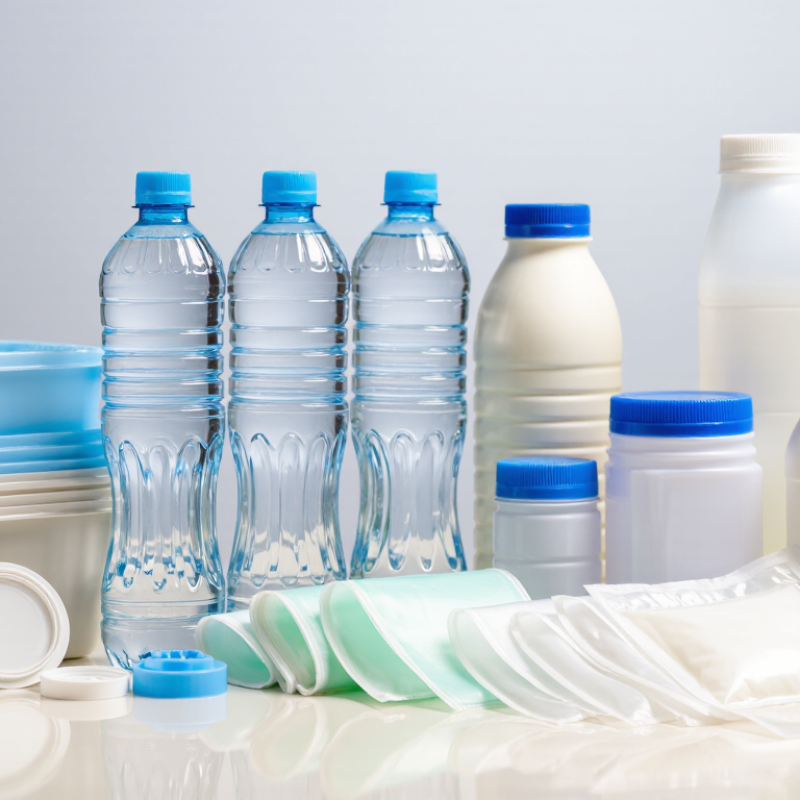
A plastic is not suitable for food packaging simply because it looks clean or feels sturdy. Its composition must be appropriate for the food it touches. The material should also be tested for its intended use, including contact time and temperature. Food-contact testing can help assess whether substances may migrate into food. Details matter.
Packaging conditions change the choice. A pouch for dry crackers needs different protection from a container holding warm soup. Heat, oils, acidity, and moisture can affect performance. The plastic must keep its shape, protect the food, and seal reliably during storage and transport. A lid that leaks after a small bump is not a minor flaw.
Food-contact requirements vary by market and application, so suppliers should provide clear documentation for the exact material and use. Ask about temperature limits, testing, and whether the packaging suits the food’s composition.
Teams sometimes focus heavily on barrier performance and overlook sealing or handling. I would not assume one resin works for every product. Even a well-tested choice may need practical trials with the actual food, filling process, and storage conditions.
Food-grade is a use condition, not a guarantee attached to a resin code. A container must suit the food, contact time, temperature, and processing conditions. The U.S. FDA evaluates food-contact substances for intended use and expected exposure, so ask for documentation covering the finished article, additives, and use limits. A cold-water test proves little. Heat, oils, and acidic sauces can change migration behavior. I would also check seals, drop resistance, and whether the package stays intact during filling and transport. Small defects matter.
Performance is a trade-off. PET, polyethylene, and polypropylene each behave differently; no single resin fits every food or filling line. Test the actual package under realistic conditions, including hot filling or freezer storage when relevant. OECD’s 2022 Global Plastics Outlook reports that packaging accounted for 40% of plastic waste generated in 2019. That figure covers packaging broadly, not food packaging alone, but it underlines the value of using only the material needed. Do not thin a wall until it cracks at the corners. Recheck barrier performance and seal strength after material reductions. A resin label is a starting point, not proof of safety.
Typical melting-point ranges for common packaging polymers
Bars show approximate midpoints of typical melting ranges: PET 250–260°C, HDPE 125–135°C, polypropylene 160–170°C, and LDPE 105–115°C. Actual values vary by grade and formulation. Melting point is a material property—not proof of food-contact safety or a recommended use temperature. Confirm regulatory compliance and suitability for the intended food, temperature, and contact conditions.
PET is widely used for clear beverage bottles, salad containers, and trays because it is light and offers a useful moisture barrier. HDPE suits opaque milk bottles, juice containers, and sturdy tubs; its stiffness helps packages withstand handling. PP is common in yogurt cups, deli tubs, and microwaveable containers, where heat resistance matters.
Check the intended use. A resin name alone does not confirm suitability for every food or temperature.
LDPE appears in bread bags, liners, and flexible films, often helping seal freshness around dry foods.
Packaging is a major plastics market: PlasticsEurope’s Plastics—the Fast Facts 2023 reports that packaging represented 39% of plastics demand in Europe in 2022. That figure covers packaging broadly, not food packaging alone.
One practical detail is easy to miss: a package may combine several layers, so the material touching the food can differ from the outer layer.
Clear, light, and tough. Yet choosing a plastic by convenience alone can overlook shelf life, sealing needs, and whether local recycling systems accept that format.
Top Food Grade Plastics for Food Packaging
Choosing plastic for food packaging starts with the food itself. Clear PET suits chilled drinks, salad greens, and other products where visibility matters. It offers a useful moisture barrier, but it is not the right choice for every hot-fill process. HDPE is common for milk and juices because it is sturdy and handles routine storage well. Check the package’s temperature limits. A familiar resin name alone does not confirm that a container suits a specific use.
For warm foods, polypropylene can be a practical option when the package is rated for the intended heat. That rating matters more than guesswork. LDPE works well in flexible films and wraps, especially for keeping produce covered. But thin film may offer limited protection from oxygen or punctures. Foods rich in oil, highly acidic sauces, and products stored for months can need stronger barriers or layered packaging. Small details matter: a greasy curry and a dry biscuit place very different demands on a package.
Packaging choices involve trade-offs. Better clarity may mean less light protection; a tougher container may use more material. Test the actual food, storage time, and temperature together, rather than relying on a resin label alone. Food-contact suitability also depends on intended use and applicable requirements. I would revisit assumptions after real storage trials; lab conditions do not always match a busy refrigerator or a warm delivery van. Short trials help. But they are not proof of long-term performance.
Packaging suitability depends on the specific resin, additives, food type, contact time, and storage conditions. Use materials verified for the intended food-contact application and follow the applicable local regulations and manufacturer specifications.
| Plastic | Resin Identification Code | Common Food Uses | Useful Characteristics | Important Considerations |
|---|---|---|---|---|
| Polyethylene terephthalate (PET) | 1 — PET | Water and soft-drink bottles, cooking-oil bottles, salad containers, and clear food trays | Lightweight, clear, and provides a good barrier to moisture and gases for many packaged foods | Many PET packages are designed for single use. Do not assume a package is suitable for hot filling, oven use, or repeated use unless it is specifically labeled for that purpose. |
| High-density polyethylene (HDPE) | 2 — HDPE | Milk and juice bottles, yogurt tubs, food-storage containers, and closures | Durable, relatively moisture-resistant, and available in opaque or translucent forms | Often chosen for aqueous foods. Suitability for oily foods, hot filling, or repeated washing depends on the particular package design and specifications. |
| Low-density polyethylene (LDPE) | 4 — LDPE | Bread bags, frozen-food bags, flexible liners, and squeeze bottles | Flexible, lightweight, and effective as a moisture barrier | Offers less rigidity and generally less gas barrier than some other packaging plastics. Verify suitability for hot foods and fatty foods for the intended conditions. |
| Polypropylene (PP) | 5 — PP | Food tubs, margarine containers, takeaway containers, bottle caps, and some microwaveable packages | Good chemical resistance and often used where greater heat tolerance than many common packaging plastics is needed | Microwave or hot-food use is appropriate only when the specific package is labeled or documented for that use. Avoid direct oven or stovetop use unless explicitly specified. |
| Polystyrene (PS) | 6 — PS | Some cold-food cups, disposable cutlery, bakery trays, and protective foam food-service containers | Can be rigid and clear, or lightweight and insulating when made as expanded foam | Not all PS packages are suitable for hot or fatty foods. Check the intended-use labeling and local rules, which may restrict certain disposable food-service applications. |
| Polyvinyl chloride (PVC) | 3 — PVC | Some food wraps and packaging films, subject to the specific formulation and use | Can be flexible and cling well when formulated for food packaging | Food-contact suitability depends on the formulation and intended conditions. Do not use non-food-grade PVC materials with food; verify compliance and restrictions for the relevant market. |
| Polycarbonate (PC) | 7 — Other | Some reusable water containers and durable food-contact equipment | Strong, transparent, and impact-resistant | Some polycarbonate products may be made with bisphenol A (BPA). Check product composition, intended use, and applicable regulations; code 7 includes many different plastics and does not identify a specific resin. |
Food-grade performance depends on the exact resin, additives, and intended use—not just the plastic type. PET, HDPE, and polypropylene are common choices, but a container suitable for cold storage may not be suitable for hot filling. In the United States, food-contact materials must meet applicable FDA requirements, including relevant provisions of 21 CFR. Check supplier documentation for the intended food, temperature, and contact duration. Resin alone is not proof of compliance.
Handling matters, too. Keep packaging clean and dry before filling, and avoid reusing containers unless they are designed for repeated use. Heat, deep scratches, and harsh cleaning can affect performance. Small details count. A lid left beside a warm production line may face different conditions from the bottle it seals. It is tempting to treat all “food-grade” plastics as interchangeable. They are not.
Recycling depends on local collection systems and clean material streams. Empty containers, separate components where facilities require it, and follow local sorting instructions. OECD’s Global Plastics Outlook reports that only 9% of global plastic waste was ultimately recycled in 2019. That figure is a sobering reminder: recyclability on paper does not guarantee recycling in practice. Labels, sleeves, food residue, and mixed materials can complicate sorting. Packaging choices deserve another look when real-world recovery is limited.